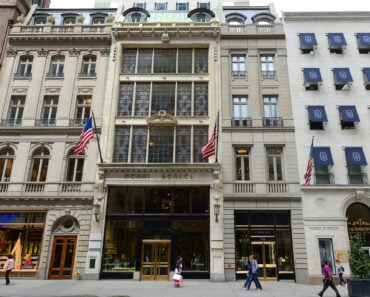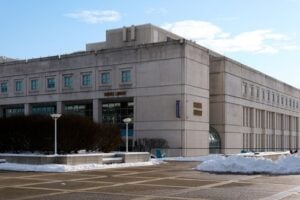
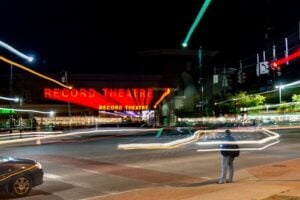
A closed Record Theatre storefront on Main Street in Buffalo, New York, photographed October 10, 2014. Photo: RGleason / Shutterstock.com
Before digital streaming and algorithmic playlists flattened the music-buying experience, digging for vinyl across Upstate New York was an essential cultural pursuit. From college neighborhoods in Syracuse and Ithaca to the working-class music hubs of Buffalo, Rochester, Utica, and the Capital District, the region supported an extraordinary variety of independent and locally founded record shops.
These stores were more than places to buy an album. Musicians met other musicians, collectors searched for rare singles, and customers discovered jazz, blues, soul, punk, hard rock, and sounds that rarely reached commercial radio. Sometimes the person behind the counter knew more about an obscure release than anyone else in town.
What follows is the history of 25 record shops and regional music retailers whose original stores or identities have disappeared. Some were substantial retail businesses. Others were small, specialized storefronts remembered today largely through archival accounts, local reporting, and the people who once browsed their shelves. Together they tell a story about how Upstate New Yorkers discovered music before a search box could find almost anything.
Western New York and Buffalo
1. Home of the Hits (Buffalo)
At 1105 Elmwood Avenue, Home of the Hits became one of Buffalo’s defining independent music shops. Jennifer Preston established it in 1982 after taking over the Elmwood business that had operated as Play It Again Sam. The store favored music that could be difficult to find at ordinary retailers, including punk, garage rock, experimental releases, and independent-label recordings.
Its importance reached beyond the records on the shelves. Local bands brought in demo recordings, musicians put up show flyers, and regular customers discovered the people who shared their tastes. Home of the Hits closed in 2006, but its influence on Buffalo’s underground music scene has been remembered by former employees, musicians, and music writers.
2. Play It Again Sam (Buffalo)
Before there was Home of the Hits, there was Play It Again Sam, a Buffalo business remembered for used records and music outside the mainstream. It opened in 1976 and developed an audience at a time when punk, new wave, and independent music were beginning to change what record-store customers wanted to hear.
The shop’s history is closely tied to Jennifer Preston and the later Home of the Hits. Play It Again Sam’s Elmwood location became the foundation of that successor business in 1982. Remembering the two stores together helps explain how Buffalo’s independent music culture grew through the relationships between shop owners, employees, local musicians, and customers.
3. Record Theatre (Buffalo)
Leonard Silver founded Record Theatre in 1976, and the business grew into a major name in Western New York music retailing. Its landmark Buffalo store at Main Street and Lafayette Avenue offered an enormous selection, reaching far beyond the modest inventory that people associated with smaller neighborhood record shops. The company eventually operated numerous locations, including stores outside New York State.
Record Theatre was also memorable for the experience of browsing: album artwork, promotional displays, discounted releases, and the feeling that a trip to the store could occupy an entire afternoon. Its final Buffalo location closed in August 2017 after more than four decades. For many residents, the end of Record Theatre marked the disappearance of a familiar piece of the city’s musical landscape.
4. Cavages (Buffalo and Central New York)
Cavages was a homegrown Western New York record retailer that began in 1944 and later spread through shopping malls across the region. Based in the Buffalo area, it offered the convenience of a dedicated music shop within the commercial centers where families were already spending their weekends. Cavages also established a presence in cities including Rochester and Syracuse.
The chain’s history crossed paths with Central New York’s Gerber Music stores, which Cavages acquired in 1982. Its mall locations introduced generations of customers to new albums and familiar chart favorites before the business disappeared in 1994. Cavages reminds us that a regional chain could still occupy a distinctive place in local music memories.
5. New World Record (Buffalo)
New World Record opened in 1984 and became another important part of Buffalo’s independent record-store culture. Across several locations, including time on Elmwood Avenue, it offered listeners choices ranging from world music and jazz to alternative rock and singer-songwriters. The store helped fill the space between mainstream mall retailers and shops devoted to the deepest underground releases.
Customers also encountered musicians in person. Buffalo accounts of the store remember appearances by touring artists and the connections it forged between listeners and the local performance scene. New World Record closed in 2008, after changes in music buying and retailing had taken a heavy toll on independent shops.
6. Apollo Records (Buffalo)
Apollo Records, on Elmwood Avenue, was associated with Gary Sperrazza, a longtime figure in rock writing, music collecting, and Buffalo’s underground scene. The shop belonged to an era when a small store’s character often reflected the unusually deep knowledge and personal tastes of the person behind its counter.
Apollo’s selection and atmosphere gave it a distinctive identity among Buffalo record collectors during the 1980s and 1990s. Recollections of the store often mention Sperrazza’s connections to independent music and rock journalism. Its disappearance also illustrates something that cannot easily be duplicated online: the unpredictable, highly personal experience of visiting a record shop with a strong point of view.
7. Sit and Spin (Buffalo Area)
Sit and Spin began in 1999 and became known for punk and hardcore music, along with used recordings across several genres. It operated first on Transit Road and later on Delaware Avenue in North Buffalo. Its musical identity placed it within a broader local network of shows, bands, collectors, and stores serving listeners who wanted more than chart hits.
The shop’s original identity ended in 2008, when a change of ownership led to Spiral Scratch. The transition tells a familiar story in independent retail: even when one name disappeared, its customers, collections, and local musical connections could help give rise to another business.
8. Spiral Scratch (Buffalo)
Spiral Scratch followed Sit and Spin in 2008 and became one of Buffalo’s best-known independent record shops of its period. The store occupied several addresses, including 2531 Delaware Avenue, 291 Bryant Street, and 1109 Elmwood Avenue, near the former Home of the Hits. Its focus on independent music made it part of a continuing lineage of stores important to local collectors.
Owner Dave Palumbo was himself connected to Buffalo’s music scene, and the shop offered more than a place to complete a record collection. It gave customers somewhere to encounter underground releases and other people interested in them. Spiral Scratch closed in 2016, leaving another chapter in Buffalo’s record-store history.
9. Record Runner (Buffalo and Syracuse)
Record Runner is remembered in both Western and Central New York. Buffalo music histories place a Record Runner near the Amherst Theatre in University Plaza, where customers could search through a broad selection that included hard-to-find recordings. Syracuse music historian Ron Wray also documents Record Runner stores on Marshall Street near Syracuse University.
The Syracuse operation later passed to Record Theatre. Those university-area locations belonged to a time when the independent shop was closely connected to college radio, concert culture, and student discovery. Record Runner’s different local footprints make it a useful reminder that a familiar store name could have a history extending across several Upstate music communities.
Rochester and the Mohawk Valley
10. Lakeshore Record Exchange (Rochester)
Lakeshore Record Exchange began in the Rochester area in 1980, founded by Ron and Jackie Stein. The business first operated in Charlotte near Lake Ontario and became known for recordings that were not always easy to find elsewhere. Andrew Chinnici purchased the shop in 1988 and later brought it to 370 Park Avenue, where it became a fixture of Rochester’s alternative music community.
The store stocked records, CDs, and other music-related material while helping customers discover artists through recommendations and conversation. After decades of serving listeners, Lakeshore Record Exchange closed in 2017. Its farewell was covered by local news outlets, reflecting how deeply a specialized music shop could become woven into the culture of a neighborhood.
11. The Last Unicorn (Utica and New Hartford)
The Last Unicorn began in Herkimer before expanding into the Utica area, including a Genesee Street location and a later store on Commercial Drive in New Hartford. The independently owned business built a reputation far larger than its storefronts, serving generations of Central New York listeners interested in new releases, imports, and used recordings.
Former employees and customers have recalled midnight album sales, deep bins of vinyl, and the friendships that developed through regular visits. The store even received national industry recognition in the 1990s. Although the business is gone, The Last Unicorn remains an unusually vivid memory for people who followed music in the Mohawk Valley.
Central New York and Syracuse
12. Walt’s Record Shop (Syracuse)
Walt’s Record Shop began in downtown Syracuse in March 1951 under the name The Record Shop. Its first address was 114 West Jefferson Street, and it moved to 352 South Salina Street in 1959. Owner Walt Kandziela and longtime manager Ed Grudynski helped make it a destination for listeners seeking singles, albums, and advice from people who knew their inventory.
One of the shop’s most memorable features was the opportunity to listen to records before buying them. Syracuse music historian Ron Wray has also documented visits by nationally known performers and the store’s importance to local music fans. Walt’s closed in July 1980, ending a nearly three-decade chapter in downtown record shopping.
13. Gerber Music (Central New York)
Gerber Music was a family-run Central New York institution whose roots included a Shoppingtown music business opened in 1964. It grew into a network of stores serving communities around Syracuse and Auburn, with locations at shopping centers including Fairmount Fair, Northern Lights, and Penn-Can Mall. Its shelves held records, tapes, instruments, and music accessories.
Gerber was also a meeting place for regional musicians and music-store employees. Its wide selection and concert-ticket business made it part of local entertainment life, not simply another mall merchant. The Gerber locations were sold to Cavages in 1982, bringing an end to a distinctive family identity that Syracuse music followers still remember.
14. Desertshore Records (Syracuse)
Desertshore Records operated at 730 South Crouse Avenue on Syracuse’s University Hill, close to the university community that helped sustain independent record retailers. Local music historian Ron Wray identifies Tom Payne as an owner and Charlie Robbins among those connected to the store.
University Hill was fertile ground for a shop with an independent identity. Students, radio listeners, and musicians all had reasons to search for recordings beyond those played by mainstream stations. Desertshore belongs to the history of that neighborhood’s music-shopping culture, even though fewer easily accessible records of its daily operation survive than for Buffalo’s largest shops.
15. Spectrum Records (Syracuse)
Spectrum Records had locations associated with University Avenue, Walnut Street, and the Schine Student Center in Syracuse. Its presence near Syracuse University placed the business directly in the path of students interested in popular recordings and less familiar musical discoveries. Ron Wray’s historical inventory of local shops identifies Spectrum as one of the city’s noteworthy music retailers.
The setting mattered. College neighborhoods created audiences for imported records, album-oriented rock, experimental sounds, and music encountered through campus radio. Spectrum was part of the physical retail culture through which Syracuse students and residents discovered music before online catalogs made obscure recordings easier to locate.
16. Carm’s Records (Auburn)
Carm’s Records opened in Auburn on August 13, 1959, under Carm and Fred Iaconis and later their family. Its Genesee Street addresses included 69½ Genesee Street and 110 Genesee Street. Customers could buy vinyl records, cassettes, eight-track tapes, and music accessories, making it a dedicated destination in the city’s downtown shopping landscape.
The store also sold concert tickets, another reminder of how record shops connected music fans to live performances. Syracuse music historian Ron Wray remembered buying a Ronnie Dio and the Prophets album there, linking the shop to the region’s own rock history. Carm’s closed in September 1982.
17. Knucklehead’s (North Syracuse)
Knucklehead’s operated at 201 South Main Street in North Syracuse, with Jack Wolak identified as its owner. Syracuse music-history records place the business there from 1989 to 2000. It belonged to the later years of brick-and-mortar music shopping, when fans might compare CDs and vinyl or follow recommendations from a specialized retailer.
Wolak’s broader music-retail history also included a rare-record business begun as mail order in Massena before moving into the Syracuse area. Knucklehead’s represents the kind of small, personality-driven shop that could offer a much more particular musical selection than a department-store record counter.
18. Record Kingdom (Syracuse)
Record Kingdom was part of Syracuse’s 1970s record-shopping scene. Ron Wray places the shop near East Fayette Street and associates it with Arthur Lane. Its history belongs to a period when record retail could range from giant downtown outlets to modest shops devoted to specialized inventory.
For customers exploring music beyond a few current radio hits, a smaller retailer could make the difference between hearing about an album and actually finding a copy. Record Kingdom’s name survives in regional music histories even though the storefront itself belongs to the past.
19. Pat’s Record Shop (North Syracuse)
Pat’s Record Shop operated in a North Syracuse strip plaza north of Taft Road. Syracuse music historian Ron Wray identifies its owners as Bud and Pat and describes a selection that included vinyl LPs, singles, extended-play records, cassettes, and particularly country music.
That emphasis is an important part of Upstate music-retail history. Not every independent store was built around punk, alternative rock, or college radio. Shops such as Pat’s served listeners whose tastes could be overlooked by bigger stores focused largely on mainstream releases, giving a neighborhood a useful local source for recordings and music conversation.
20. Junior’s Record Shop (Syracuse)
Junior’s Record Shop, owned by Junior Stevens, stood near South Geddes Street and Burnet Park Drive on Syracuse’s west side. Historical accounts describe its stock of used recordings, including older collectible 45-rpm singles and LPs. Such shops connected customers with the music of earlier decades long before online resale marketplaces became commonplace.
A store devoted to older records could attract customers interested in completing a collection or finding a performance they remembered hearing years before. Junior’s was part of a local commercial world in which used music had its own neighborhood specialists and an audience willing to browse patiently.
21. University Music Box (Syracuse)
University Music Box, also remembered under the Ohmsted name and as Varsity Victrola, was associated with 754 South Crouse Avenue on Syracuse’s University Hill. The Ohmsted family operated a full-line music business offering records, tapes, phonographs, needles, and other accessories.
Its location near Syracuse University placed it amid changing generations of students and music fans. What makes the shop historically interesting is the breadth of its business: people could obtain both recordings and the equipment required to play them. University Music Box belonged to an earlier music-shopping world in which the record store and the neighborhood audio specialist could be closely connected.
22. Sound Shack Records (Syracuse)
Sound Shack Records is another Syracuse name preserved in local music-history accounts. Ron Wray places it along South Salina Street near the Sears, Roebuck building. That corridor was once an important part of downtown shopping, with music buyers able to visit several different retailers during a single trip.
Sound Shack’s place in the story is more modestly documented than that of Walt’s or Gerber, and precise operating dates are not firmly established in the sources reviewed. Even so, its appearance in a detailed local shop directory offers a reminder of the smaller storefronts that contributed to the city’s record-buying culture.
Ithaca and the Southern Finger Lakes
23. No Radio Records (Ithaca)
No Radio Records opened in Ithaca in 2006 under owner Bob Proehl, with an identity built around independent music and close ties to the community. Contemporary reporting in the Cornell Daily Sun described the shop’s efforts to make space for local artists and live performances as well as for recordings beyond the standard commercial selections.
The business closed in 2009, but the storefront’s life as a music gathering place did not immediately end. The space was slated to become a café and live-music venue called The Shop. No Radio’s short history shows that a small independent record store could make a cultural impact even without the long lifespan of an older city institution.
Albany and the Capital Region
24. Blue Note Record Shop (Albany)
Albany’s Blue Note Record Shop opened in 1948 at 156 Central Avenue, founded by Abram Pock. It became known for an immense selection of 45-rpm records and a highly old-fashioned approach to retailing. Customers remembered a store that felt almost suspended in another era, especially after so much of the music business shifted from physical singles to digital formats.
Blue Note closed during the COVID-19 pandemic. Its decline reached a final, visible moment on August 25, 2026, when the deteriorated historic building was demolished. A September 2026 Times Union account documented the building’s fate, the shop’s unusual history, and the loss of much of its remaining record inventory. The story has become a poignant example of how a record store can vanish along with the physical place that housed it.
25. Music Shack (Albany)
Music Shack operated at 61 Central Avenue in Albany, part of a retail corridor that had room for more than one kind of record buyer. Times Union reporting on the Blue Note recalled Music Shack as an earlier, now-defunct music retailer and identified its owner as Rocky Roy.
Music writer and musician Michael Eck worked at the store, where his detailed knowledge of record catalogs became part of the shop’s identity. Music Shack did not leave the extensive public paper trail of Albany’s Blue Note, but its remembered place in local music commerce illustrates how much of this history survives through people who actually worked behind the counter.
For more on the record-shopping culture of New York, read our 25 Lost NYC Record Stores and Vinyl Shops We Still Miss. You can also explore the retailers behind the listening equipment in 25 Lost Electronics, Stereo & Hi-Fi Stores Across Upstate New York.