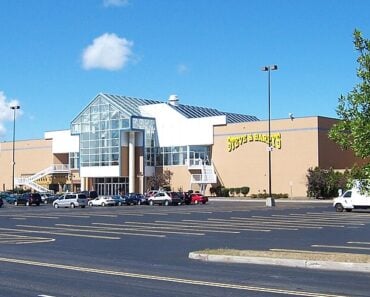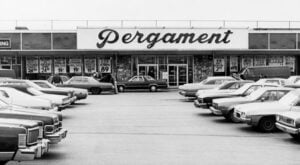
Pergament Home Center. Photo: Akhabaiev, CC BY-SA 3.0, via Wikimedia Commons
For generations of Long Islanders, Pergament was one of those stores that seemed to be part of the suburban landscape. Whether a homeowner needed paint for a bedroom, wallpaper for a kitchen, replacement hardware, or supplies for a weekend project, the familiar Pergament name was never far from the conversation. Its stores grew alongside the neighborhoods they served, long before national home-improvement warehouses came to dominate the market.
But Pergament’s story began in New York City, not in a giant suburban shopping center. What started as a small business selling paint and wallpaper grew into a substantial regional home-center chain. By the time the company disappeared in 2001, it had survived decades of changing consumer habits, a change in ownership, and increasingly intense competition. The retail stores are gone, although the Pergament family name continues in commercial real estate.
What Happened to Pergament Home Centers?
Pergament Home Centers went out of business in 2001 after entering bankruptcy proceedings. The company had been struggling with weak sales, financial obligations, and competition from larger home-improvement chains, particularly Home Depot and Lowe’s. The final shutdown followed years of ownership changes and efforts to keep the regional business viable.
That is the short answer. The fuller story begins with the remarkable growth of homeownership across New York’s suburbs and the kind of store that served those homeowners before the warehouse format became commonplace.
From a Queens Paint Store to Long Island
The Pergament family’s own company history traces the original store to 1939, when Louis Pergament opened a paint-and-wallpaper business on Linden Boulevard in Laurelton, Queens. That detail is important because accounts of the chain sometimes give 1935 and Franklin Square as its starting point. The family timeline instead identifies Franklin Square as part of the company’s postwar expansion, rather than its original location.
In 1948, Pergament opened a store at Hempstead Turnpike and Franklin Avenue in Nassau County. A Freeport location followed only months later. The timing could hardly have been better. Long Island was being transformed by new residential developments, and families moving into houses needed products to decorate, maintain, and improve them.
The company followed those customers. Its expansion during the 1950s included stores in East Meadow and Levittown. The Levittown location used the name Pergament Decorating Center, reflecting a business that was becoming much more than a neighborhood paint shop. It also reflected an important shift in retailing: instead of buying all their supplies through builders or contractors, more homeowners were taking on projects themselves.
How Pergament Became a Regional Home-Center Chain
During the 1960s, Pergament expanded to roughly fifteen stores. The family business offered the kind of decorating and home-improvement merchandise that suited suburban households, from paint and wallpaper to flooring and hardware. Its advertising made the company familiar well beyond the immediate neighborhoods surrounding individual stores. The slogan “Be Confident, Shop Pergament” appeared across regional media.
During the 1970s, the stores grew in size and variety. Pergament adopted the Home Centers name as its assortment expanded. Its Bethpage operation became a particularly large discount department center, while the company developed major warehouse and distribution facilities, including a building in Melville that served as its headquarters. What had started as a specialty business had grown into a regional retail operation equipped to serve a much broader range of home-improvement needs.
Expansion was not limited to Long Island. Pergament operated in the wider New York metropolitan area, including New Jersey and Connecticut, and reached more than forty stores at its peak. Customers could shop for paint, floor coverings, lighting, tools, hardware, and other supplies under one roof. This was the era when regional chains could build strong identities without having the nationwide scale of the retailers that would eventually challenge them.
An example of Pergament’s ambitions appeared in Greenburgh, Westchester County, in 1982. A contemporary home-center trade publication described a new Pergament store built with energy-saving features, including improved insulation, reduced window area, and systems designed to limit heating and cooling losses. The project shows that Pergament was actively developing its store format, not simply operating an aging collection of shops.
The 1989 Sale Changed the Business
On February 28, 1989, the Pergament family sold the home-center retail business. The transaction separated the chain’s operating business from an important part of the family’s commercial property interests. According to the family’s own history, the Pergaments retained the real estate associated with the stores and continued pursuing property ownership and development through Pergament Properties.
The retail chain passed into outside ownership through a leveraged acquisition. During the following decade, the company faced restructuring, financial pressures, and additional ownership changes. By 2000, investors had acquired the chain from a German banking institution that had taken control of it. The important distinction is that the family no longer owned the home-center retail business when it ultimately failed.
It is tempting to point to the 1989 sale as the single event that destroyed Pergament. The evidence supports a more complicated explanation. Financing and ownership difficulties mattered, but the home-improvement marketplace was also changing in ways that made it increasingly difficult for a regional chain to compete.
Home Depot, Lowe’s, and the Changing Long Island Market
By the 1990s, Home Depot had begun establishing itself on Long Island. Its Patchogue store was among its early entries into the market. Lowe’s also posed a growing competitive threat. These national chains could draw on extensive distribution networks, high-volume purchasing, and large warehouse-style stores carrying broad assortments of building materials and home-improvement products.
Pergament still had a recognizable name and loyal customers, but familiarity alone could not overcome the financial advantages of much larger competitors. The national warehouses made it increasingly easy for shoppers to compare selection and price in one visit. At the same time, Pergament was dealing with its own financial problems, including difficulty meeting obligations on retail properties.
The extent of the trouble was clear by February 2001. Long Island Business News reported that Pergament had 31 stores in the metropolitan New York area, including 17 on Long Island, and that unpaid rent had prompted landlords to seek bankruptcy protection against the company. Those figures illustrate how much the chain had contracted from its earlier peak.
The 2001 Bankruptcy and Final Store Closings
The decisive collapse came in February 2001, when Pergament entered Chapter 11 proceedings in federal bankruptcy court in Central Islip. Contemporary bankruptcy reporting listed approximately $101.8 million in assets and $133.7 million in liabilities. Three landlords had previously filed an involuntary bankruptcy petition, and the retailer sought financing while attempting to manage the crisis.
The proceedings did not produce a lasting rescue. Instead, the company moved toward winding down its operations. Its remaining stores closed, and the leases for 31 retail locations were scheduled for auction as the business was dismantled. By the end of 2001, Pergament Home Centers had disappeared from the region’s shopping landscape.
For customers who had grown up seeing the name on Long Island shopping strips and major roads, the closure marked the end of a familiar way of shopping for home projects. Pergament had not been a tiny local hardware shop. It was a substantial regional chain, and its disappearance showed just how much the industry’s economics had changed.
What Happened to the Pergament Family and Its Properties?
The retail stores closed, but the Pergament name did not vanish from business. The family’s property operations had roots going back decades before the chain’s bankruptcy. During the 1980s, those interests included retail developments such as Gateway Plaza in Patchogue. The decision to retain real estate when the home-center business was sold in 1989 left the family with a separate business that did not depend on continued operation of the Pergament stores.
Pergament Properties remains in business, with holdings and development interests in shopping centers, office buildings, and other commercial properties. Its official history also describes expansion outside New York, including properties in the southeastern United States. This is a continuation of the family’s business activities, not a reopening of the old home-center chain.
Why Long Islanders Still Remember Pergament
Pergament belonged to a period when suburban home improvement had a strongly regional character. A store could become part of the routine of maintaining a house, decorating a new room, or preparing for another weekend of repairs. Pergament’s growth from a Queens paint-and-wallpaper business into a chain known throughout the metropolitan area followed the development of those suburbs almost step for step.
There are still local hardware stores and specialty home-improvement retailers serving Long Island, but Pergament itself never returned after the 2001 shutdown. Its history explains both the appeal of the old regional home center and why so many such businesses struggled as the national warehouse chains expanded. The stores are gone, while the family name survives in a different part of New York’s commercial landscape.
For more memories of home-improvement retailers and changing shopping habits, see our look at 25 classic Long Island hardware and home-improvement stores, our history of hardware and home-improvement centers across Upstate New York, and our examination of what happened to New York’s struggling shopping malls.