Scdnr, CC BY-SA 3.0, via Wikimedia Commons
When a New York City subway car makes its final passenger trip, it does not necessarily mark the end of its useful life. Some of the trains that once carried New Yorkers to work have ended up on the floor of the Atlantic Ocean. Others have crossed New York Harbor on railroad barges, gone back to work collecting refuse from subway stations or become exhibits in museums hundreds of miles from the city.
So what happens to old New York City subway cars today? Most cars that are permanently withdrawn from service and not selected for reuse or preservation are destined for dismantling and metal recycling. The famous program that turned retired subway cars into artificial reefs ended in 2010. Nevertheless, some old cars continue to serve the transit system in ways that the passengers who once rode them might never have imagined.
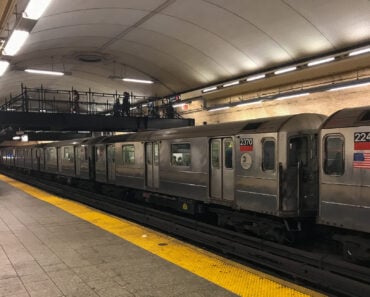
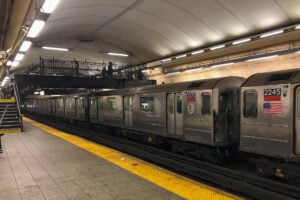
The introduction of Kawasaki’s R211 trains, which began carrying subway passengers in 2023, has brought renewed attention to the retirement of the familiar R46 cars built by Pullman-Standard in the 1970s. With their orange and yellow seats and woodgrain interior panels, the R46s have been part of the New York subway experience for generations. Their gradual replacement provides an opportunity to look at what happens to a subway car after its last stop.
When New York Subway Cars Became Artificial Reefs
Between August 2001 and April 2010, New York City Transit supplied more than 2,500 retired subway cars to artificial reef programs along the Atlantic coast. The participating states included New Jersey, Delaware, Maryland, Virginia, South Carolina and Georgia. The intention was to create underwater structures that would attract marine organisms and provide shelter for fish in areas with relatively little natural hard habitat.
Many of the earliest cars involved were the familiar Redbirds, including cars of the R33 and R36 classes that had carried passengers on the numbered subway lines. Some had originally been delivered in a light blue and white paint scheme for service associated with the 1964 World’s Fair. Their later red paint made them among the most recognizable trains in New York.
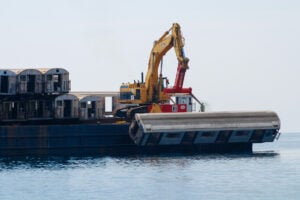
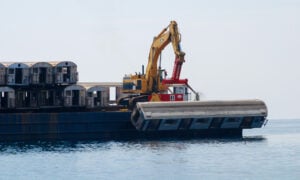
Before being taken offshore, the cars were cleaned and stripped of equipment and materials unsuitable for reef placement. Their empty bodies were transported by barge and lowered or dropped into designated areas of the ocean. The sight of a subway car disappearing beneath the waves was one of the more extraordinary images to emerge from the history of New York transportation.
Off the Delaware coast, the Redbird Reef took its name from the retired trains placed there beginning in 2001. It became a destination for recreational fishermen and a particularly unusual reminder of the city’s transportation history.
Why the Subway Reef Program Ended
The second phase of the reef program included stainless-steel cars such as the Budd-built R32s, along with other retired cars from the lettered subway lines. Stainless-steel construction had offered considerable advantages during passenger service, including reduced weight. Underwater, however, the newer cars did not always retain their shape as successfully as the older Redbirds.
In 2009, inspections of stainless-steel subway cars at New Jersey’s Atlantic City Reef revealed extensive structural damage. Contemporary reporting indicated that only two of the 48 cars examined remained intact. New Jersey suspended its acceptance of additional cars of that type.
The experience was not identical at every reef site. Delaware continued accepting subway cars until April 2010, and its reef program manager described the project as successful at the time of the final deployment. The two states’ experiences illustrate why the artificial reef program should not be remembered as either an unqualified success or a complete failure. The design of the cars, their structural integrity and conditions at the deployment sites all mattered.
After the program ended, conventional dismantling and recycling once again became a principal route for the disposal of surplus subway cars.
How Old Subway Cars Are Prepared for Recycling
Retiring a subway car involves more than removing it from the daily service schedule. The transit authority must determine whether the car or any of its components have further value to the operating fleet, the maintenance department, a museum or another organization.
Equipment that remains usable can be recovered where appropriate. A car may contain electrical assemblies, door mechanisms, brake equipment, motors and numerous other components. Even relatively small pieces of hardware can be valuable when replacement parts for an aging fleet are difficult to obtain. The removal of fluids and regulated materials must also be handled appropriately before the car is dismantled.
A subway car contains a substantial quantity of metal. The New York Transit Museum notes that an R32 weighed approximately 70,000 pounds when delivered in the 1960s. Not all of that weight is recoverable steel, and the configuration of a retired car varies according to what has already been removed. At a recycling facility, metals can be separated and processed for use as raw materials in manufacturing. A subway car that once traveled millions of miles can thus contribute to the production of entirely different goods.
The Last Trip Across New York Harbor
In 2022, the MTA documented six recently retired R32 cars being transported from Brooklyn to Jersey City aboard a railroad barge. Associated Press coverage in June of that year also documented the disposal of retired R32s via the harbor. Their journey involved New York New Jersey Rail, a freight railroad that provides the harbor’s last surviving railcar float service.
The operation is a continuation of a much older New York transportation practice. Before today’s highway network and modern freight arrangements, railroad barges moved freight cars across the harbor to connect railroads on opposite shores. The modern service links the railroad facilities of Brooklyn with those in New Jersey.
Once the R32s reached Jersey City, the plan was to transfer them to CSX freight trains for shipment to Ohio. Other retired cars have gone to scrap processors in the metropolitan area itself. Photographic records from 2025 and 2026 document R46 cars passing through Brooklyn’s freight rail facilities for shipment across the harbor to Sims Metal in Jersey City.
The R32s were introduced in 1964 and withdrawn from regular passenger service in 2020. Their special farewell trips continued into January 2022. The sight of those cars crossing the harbor marked the closing of a remarkable chapter in subway history, while also demonstrating how an old method of freight transportation remains useful in disposing of modern urban infrastructure.
Retired Subway Cars That Go Back to Work
Not all subway cars withdrawn from passenger service are ready for the scrapyard. Some have enough useful life remaining to be assigned to the transit system’s non-passenger operations, where they can help carry out the work that keeps the subway functioning.
Older subway cars have been reassigned to refuse collection and maintenance duties. Refuse trains help remove waste from stations, while other non-passenger equipment supports the upkeep of tracks and infrastructure.
A particularly unusual example can be found on the Staten Island Railway. A former R32 car has been documented as part of a train equipped with laser technology for cleaning the rails. Since 2023, the railway has used the technology to combat a problem familiar to railroads with outdoor tracks: fallen autumn leaves that become compressed into a slippery layer, reducing the grip of train wheels on the rails.
These assignments give old equipment a role very different from the one for which it was originally purchased. They also demonstrate that retirement from passenger service does not necessarily mean retirement from the railroad.
A Second Life in Emergency Response Training
Another use for retired subway cars is training emergency personnel. A real car provides a physical environment that is difficult to reproduce in an ordinary classroom, from its narrow aisles and seating arrangements to its doors and confined interior.
Retired subway equipment has been used to support emergency preparedness in the New York metropolitan region. It allows responders to become familiar with the interior of transit vehicles and practice coordinated emergency response away from the demands of a working passenger railroad.
Although these cars may never carry another paying passenger, they can help prepare the people responsible for protecting those who travel on the subway every day.
The Subway Cars That Become Museum Pieces
For New Yorkers who remember riding older subway cars, their preservation is perhaps the most rewarding alternative to scrapping. The New York Transit Museum in Downtown Brooklyn occupies the former Court Street subway station, which opened in 1936 and closed to passengers in 1946. In 1976, it became the site of a transit exhibition celebrating the nation’s bicentennial and eventually developed into the museum we know today.
The museum preserves cars from different generations of New York’s subway and elevated railroads. Visitors can see how interior design, lighting, seating and other features evolved over the decades. Its collection includes equipment dating back to the early years of the twentieth century.
Some of the preserved cars are also maintained for special passenger excursions. The annual Holiday Nostalgia Rides feature subway cars from the 1930s that remained in service into the 1970s. The museum also organized the R32 farewell trips in December 2021 and January 2022. These excursions give younger New Yorkers a chance to experience a part of the subway’s history that older passengers remember from their daily commutes.
New York Subway Cars That Find Homes Outside the City
A retired subway car does not have to remain in New York to be preserved. In July 2023, two R32 cars, numbered 3432 and 3433, were loaded onto trailers in Brooklyn for transportation to the Craggy Mountain Line in North Carolina. Both had been built by the Budd Company in 1964.
The railroad museum in the Asheville area also preserves an earlier New York subway car, providing visitors far from the five boroughs with an unexpected connection to the city’s transit system. Moving full-sized railcars over long distances requires considerable planning, but such acquisitions help preserve examples of equipment that might otherwise disappear.
Can You Buy Pieces of Old New York Subway Cars?
Even when a complete subway car cannot be saved, some of its smaller components can survive. The MTA operates an asset recovery program that makes selected surplus materials and memorabilia available for sale. The New York Transit Museum shop has also offered authentic subway artifacts, including stainless-steel grab handles from Redbird cars.
Available items change over time, but the opportunity to own a piece of a retired subway car has particular appeal for New Yorkers who grew up riding the trains. The familiar shapes and materials of those objects can bring back memories of an earlier era of the subway in a way that a photograph alone sometimes cannot.
The days when subway cars were regularly sent to the bottom of the Atlantic Ocean are over. Yet the final passenger journey of an old train can still lead to a new chapter, whether its metal is recycled, it returns to the railroad as a work car or it is preserved for future generations. The cars themselves may disappear from our daily commutes, but their place in the history of New York remains.
For more about the development of New York’s transportation system, explore The Complete History Of The New York City Subway, Why New York City Trains Went Electric, 10 Abandoned NYC Subway Stations and Secret Platforms and NYC Subway Token History: From Tokens to OMNY.