Feature Photo: DW labs Incorporated / Shutterstock.com
If you have ever shopped for designer handbags, browsed an outlet mall, or spotted one of the brand’s colorful bags on a New York City subway, you may have wondered whether Kate Spade and Kate Spade New York are actually the same thing.
The short answer is yes. Kate Spade and Kate Spade New York refer to the same fashion brand. The full consumer-facing brand name is kate spade new york, while shoppers, retailers, and even its parent company often shorten the name to Kate Spade. The name can also refer to the late designer and co-founder Kate Spade herself, which is where some of the confusion begins.
There is another reason this question comes up. Kate Spade operates both full-price retail stores and an official outlet business. That does not mean items marked “Kate Spade” and “Kate Spade New York” come from two separate brands. The outlet is a sales channel of the same Kate Spade business.
Is Kate Spade New York the Same as Kate Spade?
Yes. Tapestry, the company that owns the brand, uses both “Kate Spade” and “kate spade new york” when referring to the same brand in its corporate and financial materials. The company’s own consumer website uses kate spade new york as the full brand presentation.
What should not be confused with the brand name is the legal name of the company that owned or operated it at different points in its history. Corporate names have changed through acquisitions and reorganizations, including Kate Spade LLC and Kate Spade & Company. So it would be inaccurate to say that “Kate Spade New York” has always been the company’s legal corporate name.
For a shopper, however, the distinction is simple: saying “Kate Spade” or “Kate Spade New York” means the same fashion brand.
Is Kate Spade Outlet a Different Brand?
No. Kate Spade Outlet is an official outlet channel of the Kate Spade brand. It has its own stores and website, and the assortment and pricing can differ from the full-price retail business, but the outlet name does not represent a separate company called simply “Kate Spade.”
In other words, the words “New York” on a label are not a code telling you that an item came from a full-price boutique rather than an outlet. The brand identity remains Kate Spade New York.
How Kate Spade Began in New York City
The story began with Katherine Noel Brosnahan, a Kansas City native who moved to New York and built a career at Mademoiselle magazine. By the time she left the magazine in 1991, she had risen to become a senior fashion editor with responsibility for accessories.
Working around handbags every day convinced her that something was missing from the market. Many designer bags were ornate, heavily branded, or extremely expensive. Kate wanted something simpler: a practical handbag with clean lines, strong construction, and enough personality to feel fashionable without becoming fussy.
Andy Spade, then her boyfriend and later her husband, encouraged her to turn the idea into a business. The two funded the early company themselves, including using money from Andy’s retirement savings, rather than beginning with a large outside investment.
Why Was the Brand Called Kate Spade?
Kate and Andy were not yet married when they launched the company. Kate’s surname was still Brosnahan, but the couple liked the sound of combining her first name with Andy’s last name. They married in 1994, but the brand name had already taken hold.
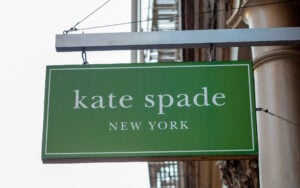
The New York connection became part of the visual identity on the bags themselves. The familiar lowercase label reading kate spade new york helped tie the young company to the city where it was conceived, designed, shown to buyers, and transformed into a fashion business.
The 1993 Launch and Six Essential Handbags
Kate Spade New York launched in 1993 with six essential handbag designs. Kate did not have formal fashion-design training, so she developed early shapes with paper before taking the concepts to manufacturers.
One of those early designs became the Sam bag, the boxy nylon tote that came to define the company’s first years. Its appeal came from what it lacked. The bag was clean, practical, structured, and visually restrained at a time when many designer handbags relied on elaborate hardware, ornamentation, or conspicuous logos.
A Brooklyn manufacturer handled early production and was willing to work with the new company. The combination of New York design, small-scale manufacturing, trade-show hustle, and department-store buyers gave the company a start that would have been difficult to replicate later as a corporate brand story. It really did begin as a small New York fashion business.
Why the Kate Spade Label Moved to the Outside of the Bag
One of the simplest decisions became one of the most important. Kate originally placed the fabric label inside the bag. Looking at the extremely clean exterior, she decided it needed a visual focal point and moved the small label to the outside.
That understated black-and-white label became instantly recognizable without covering the bag in branding. The decision captured the entire early Kate Spade philosophy: simple shapes, useful design, and just enough personality to make the product memorable.
The Sam Bag Becomes a 1990s New York Fashion Symbol
The Sam bag and the other early Kate Spade designs arrived at the right moment. The bags offered a designer identity without the price and formality associated with many European luxury houses. They became especially popular with younger professional women who wanted something polished enough for work but practical enough for everyday life.
By the middle of the 1990s, Kate Spade bags had become a familiar part of the New York fashion landscape. The restrained shapes and small exterior label were easy to recognize, and the brand became associated with an optimistic, slightly playful version of Manhattan style.
Where Was the First Kate Spade Store in New York?
The first Kate Spade boutique opened in SoHo in 1996, but an important detail is often reported incorrectly. The first shop was a tiny, approximately 400-square-foot space at 59 Thompson Street, not on Mercer Street.
The company quickly outgrew it. In 1997, the store moved to a much larger location at 454 Broome Street, near Mercer Street. That later address is probably one reason the early store is sometimes remembered as being on Mercer.
SoHo was an ideal setting for the young brand. The neighborhood had already transformed from a manufacturing district into a center of loft living, galleries, design, and fashion. Kate Spade’s clean, modern bags fit naturally into that downtown New York environment.
Kate Spade’s CFDA Awards
The brand’s rise was recognized by the Council of Fashion Designers of America. According to the CFDA’s own historical record, Kate Spade received the Perry Ellis Award for New Fashion Talent in 1995. In 1997, she was named the CFDA’s Accessory Designer of the Year.
Those dates are worth noting because they are frequently reported as 1996 and 1998. The CFDA’s own retrospective on Spade identifies the awards as 1995 and 1997.
How Kate Spade Expanded Beyond Handbags
What began with six handbags grew into a much broader lifestyle business. Over time, the Kate Spade name expanded into shoes, eyewear, jewelry, stationery, clothing, home products, fragrances, and other accessories.
The company also developed the Jack Spade men’s business, which applied a related design sensibility to men’s bags and accessories. What had begun as an attempt to solve one handbag problem had become a recognizable American lifestyle brand.
Neiman Marcus Buys Into Kate Spade
In 1999, Neiman Marcus Group purchased a 56 percent stake in Kate Spade for approximately $33.6 million. Kate, Andy, and their partners remained involved while the company continued expanding.
In 2006, Neiman Marcus acquired the remaining 44 percent of the company for approximately $59 million. Only days later, Liz Claiborne Inc. announced an agreement to acquire Kate Spade LLC from Neiman Marcus for approximately $124 million.
Kate and Andy remained briefly during the transition and fully departed the company in 2007. From that point forward, Kate Spade the woman and Kate Spade the brand had become separate stories.
From Liz Claiborne to Kate Spade & Company
Liz Claiborne Inc. went through a major corporate transformation during the years that followed. The company changed its name to Fifth & Pacific Companies and eventually sold off other major brands. In 2014, the corporation adopted the name Kate Spade & Company, reflecting how central the Kate Spade business had become.
That corporate history is another reason the phrase “Kate Spade New York” should not be confused with a permanent legal company name. The consumer brand remained recognizable while the corporate structure behind it changed several times.
Tapestry Acquires Kate Spade in 2017
In 2017, Coach, Inc. agreed to acquire Kate Spade & Company in a transaction valued at approximately $2.4 billion. The acquisition was completed in July 2017.
Later that year, Coach, Inc. changed its corporate name to Tapestry, Inc., creating a parent company above its individual fashion brands.
Who Owns Kate Spade Today?
Kate Spade New York is owned by Tapestry, Inc. As of 2026, Tapestry’s brand portfolio consists of Coach and Kate Spade New York.
This is an important update to older descriptions of the company. Tapestry formerly owned Stuart Weitzman as well, but completed the sale of the Stuart Weitzman brand to Caleres on August 4, 2025. Stuart Weitzman is therefore no longer a Tapestry sister brand.
What Happened After Kate Spade Left Her Namesake Company?
After leaving the business that carried her name, Kate Spade stepped away from the company she had created. She later returned to fashion with a new accessories brand, Frances Valentine, working again with longtime business partner and friend Elyce Arons.
Kate Spade died in Manhattan in June 2018 at the age of 55. By then, she had not been involved with her namesake brand for more than a decade, but her influence remained embedded in its visual language, particularly the clean shapes, practical handbags, bright colors, and sense of humor that had defined the company from the beginning.
For many shoppers, a Kate Spade bag also became associated with a particular milestone: a first professional job, a graduation, a promotion, or the first designer handbag someone bought with her own paycheck. That emotional connection helped the brand become far more than a label sewn onto the outside of a nylon tote.
More New York City Shopping History
Readers interested in the neighborhoods and retail culture surrounding the Kate Spade story can continue with our guide to the 10 Best Shopping Streets in NYC From Fifth Avenue to SoHo. You can also explore the 10 Most Famous Department Stores in NYC History, where many New York fashion brands built their audiences, and our deep history of Saks Fifth Avenue.
Sources
Kate Spade New York, Who We Are
Kate Spade Outlet, Official Website
Tapestry, Inc., Investor FAQs and Current Brand Portfolio
Tapestry, Inc., Coach, Inc. Announces Agreement to Acquire Kate Spade & Company
Tapestry, Inc., Completion of Stuart Weitzman Sale to Caleres
Council of Fashion Designers of America, Remembering Kate Spade
The New Yorker, What Kate Spade Meant for Women’s Fashion
Vanity Fair, Deuce of Spade: Archival Profile of Kate and Andy Spade
Our Town, Fear and Fashion: The Kate Spade Story
MarketWatch, Liz Claiborne to Pay $124 Million for Kate Spade
Kate Spade Brand History at a Glance
| Year | Milestone |
|---|---|
| 1991 | Kate Brosnahan leaves Mademoiselle after rising to senior fashion editor and head of accessories. |
| 1993 | Kate Spade launches in New York with six essential handbags, including the Sam bag. |
| 1994 | Kate Brosnahan and Andy Spade marry. |
| 1995 | Kate Spade receives the CFDA Perry Ellis Award for New Fashion Talent. |
| 1996 | The first Kate Spade boutique opens in a roughly 400-square-foot space at 59 Thompson Street in SoHo. |
| 1997 | Kate Spade is named CFDA Accessory Designer of the Year; the SoHo store moves to 454 Broome Street. |
| 1999 | Neiman Marcus Group buys a 56 percent stake in the company. |
| 2006 | Neiman Marcus acquires the remaining stake and agrees to sell Kate Spade LLC to Liz Claiborne Inc. |
| 2007 | Kate and Andy Spade fully leave the company. |
| 2014 | Fifth & Pacific Companies changes its corporate name to Kate Spade & Company. |
| 2017 | Coach acquires Kate Spade & Company in a $2.4 billion transaction; Coach later becomes Tapestry, Inc. |
| 2018 | Kate Spade dies in Manhattan at age 55. |
| 2025 | Tapestry sells Stuart Weitzman to Caleres, leaving Coach and Kate Spade New York as Tapestry’s two brands. |
| 2026 | Kate Spade New York continues as a Tapestry-owned global fashion and lifestyle brand. |
Published August 14, 2026.
Is Kate Spade New York the Same as Kate Spade? Brand History & Origins article published on ClassicNewYorkHistory.com © 2026