The Ultimate Shopping Capital of the World
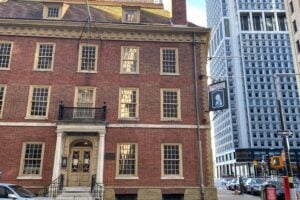
New York City is one of the most extraordinary places on the face of the earth, and everybody who visits seems to fall in love with a different piece of it. For some, it is the theater lights of Broadway. For others, it is the sheer weight of history sitting inside buildings such as Federal Hall or the Woolworth Building. For a great many more, it is the food, from a two-dollar slice to a tasting menu that costs more than a plane ticket.
But ask around long enough, and you will find that for a huge number of people, native New Yorkers and visitors alike, the real magic of this city is the shopping. Not just the buying, but the experience of it. There is nowhere else on earth where you can walk twelve blocks and pass through half a dozen entirely different retail worlds, from a limestone palace selling diamonds to a cast-iron storefront filled with vintage denim, all without ever getting in a car.
This article is not really about spending money, or at least it does not have to be. It is about ten streets, corridors, and crossroads across the city where shopping becomes a kind of theater. These are places that can drop your jaw before they ever empty your wallet. You do not need to be wealthy to enjoy any of them. Some of the best afternoons New York has to offer cost absolutely nothing, just a pair of comfortable shoes and a willingness to window-shop your way down a beautiful block, the same way generations of New Yorkers have done for free. For shoppers looking for something truly special, whether it is fine jewelry, a custom suit, an independent designer, or a vintage find that may not exist anywhere else, these ten destinations offer some of the ultimate New York shopping experiences.
1. Fifth Avenue, Midtown Manhattan: 49th Street to 60th Street
Neighborhood: Midtown East and the Plaza District
Shopping Vibe: Iconic luxury, major flagships, and historic department stores
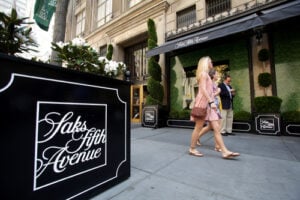
Key Stops: Saks Fifth Avenue, Bergdorf Goodman, Tiffany & Co. The Landmark, Apple Fifth Avenue, and Nike House of Innovation
Fifth Avenue remains the undisputed king of New York retail corridors, and it earned that position gradually, one Gilded Age mansion at a time. During the late nineteenth century, this stretch formed part of Millionaires’ Row, lined with private homes belonging to families such as the Vanderbilts. As commerce moved north during the twentieth century, many of those residences were demolished and replaced by stores, offices, and institutions that transformed the avenue into one of the best-known shopping destinations in the world.
Bergdorf Goodman stands on the former site of the enormous Cornelius Vanderbilt II mansion, which was sold in 1926 and replaced by the retail complex built between 1927 and 1928. Across the avenue, Tiffany & Co. opened its flagship at 727 Fifth Avenue in 1940, with the nine-foot Atlas figure and clock above the entrance becoming one of the city’s most recognizable retail landmarks. Saks Fifth Avenue, the glass cube above the underground Apple store near 59th Street, and Nike’s six-level House of Innovation at 52nd Street complete a corridor where landmark architecture and modern retail spectacle occupy the same sidewalks.
2. Prince Street, Spring Street, and the SoHo Side Streets
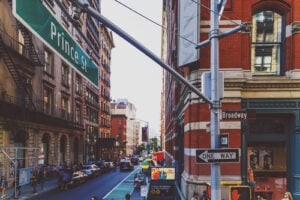
Neighborhood: SoHo, South of Houston Street
Shopping Vibe: Designer flagships, cast-iron architecture, streetwear, and independent boutiques
Key Stops: Prada Broadway Epicenter, Chanel SoHo, Louis Vuitton SoHo, Diptyque Prince Street, and Kith Women
Set against nineteenth-century cast-iron buildings and cobblestone side streets, Prince Street, Spring Street, and the surrounding blocks form the beating heart of downtown fashion. The district once served as a manufacturing center, filled with factories and warehouses whose ornate cast-iron facades were assembled from prefabricated pieces. When artists moved into the abandoned lofts during the 1960s and 1970s, they helped turn SoHo into the birthplace of New York loft living, and upscale retail followed.
Unlike the department-store layout of Midtown, SoHo shopping is sprawling and walkable, with its major stores spread across Broadway, Greene Street, Wooster Street, Lafayette Street, Prince Street, and Spring Street. Prada’s Rem Koolhaas-designed Broadway Epicenter, Chanel on Wooster Street, Louis Vuitton on Greene Street, Diptyque on Prince Street, and Kith’s nearby stores share the neighborhood with denim shops, sneaker boutiques, perfumeries, galleries, and smaller labels. The historic district’s protected architecture gives the experience its character, placing contemporary retail inside buildings whose bones are often more than a century old.
3. Broadway, SoHo to Union Square: Canal Street to 18th Street
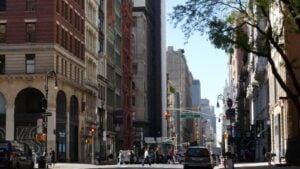
Neighborhood: SoHo, NoHo, Greenwich Village, and Union Square
Shopping Vibe: Accessible fashion, athletic gear, global flagships, and specialty retail
Key Stops: UNIQLO SoHo, Nike SoHo, Zara SoHo, Prada Broadway, and Paragon Sports
While Prince and Spring Streets hold many of SoHo’s designer boutiques, Broadway is where large-format retail takes over. The former dry-goods buildings and commercial structures along the corridor provide the wide floor plates and high ceilings needed by global clothing brands, athletic retailers, and flagship stores. This makes Broadway one of the easiest places in New York to compare different price points without leaving the same avenue.
UNIQLO’s SoHo store remains at 546 Broadway, while Nike operates its SoHo location at 611 Broadway. Prada’s landmark store sits at Broadway and Prince Street, and the corridor continues north toward Union Square and Paragon Sports at 867 Broadway. Family-owned since 1908, Paragon remains one of New York’s great specialty sporting-goods stores, with departments covering athletics, outdoor equipment, footwear, and recreation.
4. Madison Avenue, Upper East Side: 57th Street to 86th Street
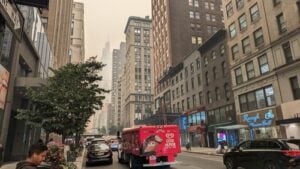
Neighborhood: Upper East Side
Shopping Vibe: Quiet luxury, haute couture, fine jewelry, and elegant architecture
Key Stops: Ralph Lauren Rhinelander Mansion, Hermès, Cartier, Giorgio Armani, and the Madison Avenue galleries
If Fifth Avenue is energetic and tourist-filled, Madison Avenue on the Upper East Side represents a quieter kind of luxury. The Madison Avenue shopping district extends for roughly thirty blocks, with fashion houses, jewelers, art galleries, beauty boutiques, and specialty stores occupying a mixture of modern buildings, limestone facades, and former townhouses.
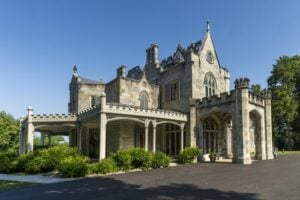
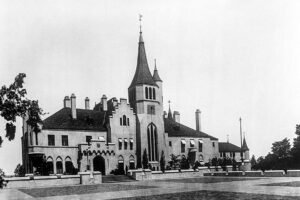
The crown jewel is Ralph Lauren’s men’s flagship at 867 Madison Avenue and 72nd Street, housed inside the Rhinelander Mansion, a French Renaissance Revival landmark completed in 1898. Ralph Lauren opened the restored flagship in 1986, creating an interior that feels more like a private estate than a conventional clothing store. Nearby Hermès, Cartier, Giorgio Armani, and other international houses keep Madison Avenue among the world’s most refined luxury shopping districts.
5. Bleecker Street, West Village
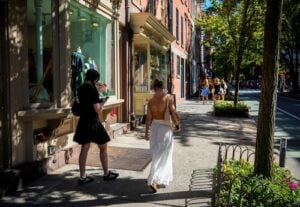
Neighborhood: Greenwich Village and the West Village
Shopping Vibe: Intimate boutiques, fragrances, fashion, books, and tree-lined charm
Key Stops: Diptyque Bleecker, LoveShackFancy, James Perse, Marine Layer, and Bookmarc
Tucked into the winding streets of the West Village, Bleecker Street offers a neighborhood-scale shopping experience that feels entirely different from Midtown. The area’s street pattern predates Manhattan’s rigid 1811 grid, and its brick townhouses, mature trees, bakeries, restaurants, and narrow storefronts give shopping here a sense of intimacy that is difficult to reproduce anywhere else in the city.
Bleecker Street excels in specialty retail rather than sheer volume. Diptyque operates its fragrance boutique at 377 Bleecker Street, while LoveShackFancy, James Perse, Marine Layer, and other fashion labels occupy nearby storefronts. Bookmarc, Marc Jacobs’s art and fashion bookstore at 400 Bleecker Street, preserves part of the street’s literary character in a neighborhood long associated with writers, musicians, coffeehouses, and independent shops.
6. Bedford Avenue and North 7th Street, Williamsburg, Brooklyn
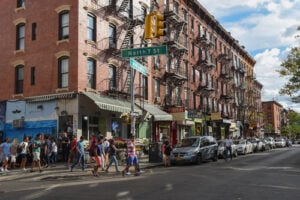
Neighborhood: Williamsburg, Brooklyn
Shopping Vibe: Vintage fashion, independent makers, jewelry, and Brooklyn street style
Key Stops: Diptyque Brooklyn, Catbird Williamsburg, Awoke Vintage, Artists & Fleas, and nearby L Train Vintage
Cross the East River into Brooklyn, and Bedford Avenue and the surrounding North Williamsburg streets form one of the city’s strongest districts for vintage clothing, local design, jewelry, and independent retail. Once part of a working-class manufacturing neighborhood shaped by generations of immigrant families, the area now combines surviving neighborhood businesses with newer boutiques, markets, cafes, and design stores.
Diptyque has a boutique directly on Bedford Avenue, while Catbird’s Williamsburg flagship is nearby on North 7th Street. Awoke Vintage has built a following through its Williamsburg locations, and Artists & Fleas brings together dozens of independent sellers each weekend at 70 North 7th Street. L Train Vintage operates nearby on Grand Street. Rough Trade, once one of Williamsburg’s best-known retail landmarks, moved to Rockefeller Center in 2021, but the neighborhood’s record, vintage, and maker culture remains central to the shopping experience.
7. 34th Street, Herald Square to Hudson Yards
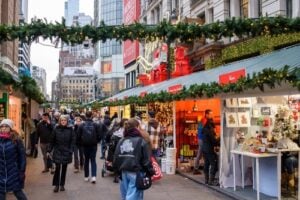
Neighborhood: Midtown West
Shopping Vibe: High-volume department stores, accessible chains, and modern luxury
Key Stops: Macy’s Herald Square, Sephora, Target, H&M, and The Shops at Hudson Yards
Cutting across Manhattan, 34th Street connects two entirely different retail worlds. At Herald Square, Macy’s occupies nearly the full block between Broadway and Seventh Avenue, extending from 34th to 35th Street. The building remains one of the world’s most famous department stores, and its historic wooden escalators, holiday windows, and enormous sales floors make it a destination even for visitors who are not planning to buy anything.
Follow 34th Street west and the streetscape changes dramatically as it approaches Hudson Yards. The Shops at Hudson Yards opened in 2019 as part of one of the largest private real estate developments in the United States. Its multilevel indoor complex currently includes a mixture of luxury and mainstream retailers, with Cartier, Dior, Fendi, Coach, H&M, and other stores operating beneath the glass-and-steel towers above the rail yards.
8. Orchard Street, Lower East Side
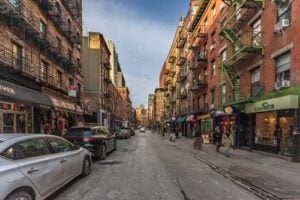
Neighborhood: Lower East Side
Shopping Vibe: Immigrant retail history, independent designers, streetwear, art, and vintage style
Key Stops: Tenement Museum Shop, LAAMS, Kallmeyer, unisecon, and Bode nearby on Hester Street
Steeped in immigrant history, Orchard Street was once famous for pushcart vendors and Jewish-owned clothing, fabric, and dry-goods businesses. Generations of newly arrived families built livelihoods in the tenements and storefronts of the Lower East Side, creating one of the most intensely commercial neighborhoods in New York. The Tenement Museum continues to preserve that history, with its visitor center and shop at 103 Orchard Street.
Today, Orchard Street has evolved into one of Manhattan’s most interesting independent shopping corridors. LAAMS operates at 74 Orchard Street, Kallmeyer’s flagship remains at 83 Orchard Street, and unisecon sells handwoven and collaged clothing at 35 Orchard Street. Bode’s menswear and tailoring stores sit nearby on Hester Street. The merchandise has changed dramatically over the generations, but the small storefronts and tenement facades still give the street a visual connection to its past.
9. 57th Street, Midtown Manhattan
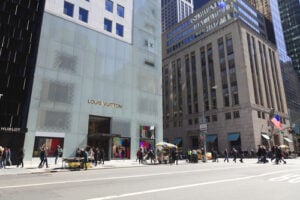
Neighborhood: Midtown and the Plaza District
Shopping Vibe: Fine jewelry, luxury fashion, major flagships, and architectural spectacle
Key Stops: Nordstrom NYC Flagship, Louis Vuitton 57th Street, Chanel, Bulgari, and Tiffany & Co. at Fifth Avenue
Crossing Fifth Avenue just south of Central Park, 57th Street has long been associated with luxury fashion, fine jewelry, art, and music. In more recent years, the surrounding blocks have also become known as Billionaires’ Row because of the exceptionally tall residential towers rising near Central Park. A walk along the street now offers views of historic storefronts, contemporary flagships, concert halls, hotels, and some of the most dramatic new architecture in the city.
Nordstrom’s New York flagship occupies 225 West 57th Street at Broadway, with its men’s store directly across the street. Farther east, Louis Vuitton operates at 6 East 57th Street, Chanel at 15 East 57th Street, and Bulgari and Tiffany & Co. anchor the Fifth Avenue intersection. The result is a corridor that works equally well for serious luxury shoppers, architecture enthusiasts, and anyone who enjoys New York window shopping at its most extravagant.
10. Columbus Avenue, Upper West Side: 68th Street to 82nd Street
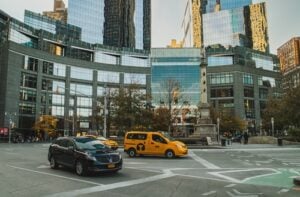
Neighborhood: Upper West Side
Shopping Vibe: Relaxed neighborhood shopping, books, stationery, fashion, and gifts
Key Stops: Paper Source, Eileen Fisher, Strand Bookstore at Columbus Avenue, local boutiques, and neighborhood gift shops
For a relaxed shopping stroll away from Midtown crowds, Columbus Avenue offers a mixture of accessible fashion, books, stationery, home goods, and neighborhood services. The avenue runs through brownstone blocks between Lincoln Center and the American Museum of Natural History, making it easy to combine shopping with museums, Central Park, dining, or a walk through the residential streets of the Upper West Side.
Paper Source operates at 309 Columbus Avenue, and Eileen Fisher maintains a store at 341 Columbus Avenue. Farther north, Strand Bookstore has an Upper West Side shop at 450 Columbus Avenue near 82nd Street. Books of Wonder, once a familiar children’s bookstore in the neighborhood, closed its Upper West Side location in 2021 and now operates on West 17th Street. Columbus Avenue remains best appreciated at an unhurried pace, with time for independent storefronts, a coffee stop, and whatever unexpected shop happens to catch your eye.
Quick Summary: NYC Shopping Streets Matrix
| Shopping Street | Neighborhood | Vibe and Price Point | Best For |
|---|---|---|---|
| Fifth Avenue | Midtown | Iconic flagships and luxury | First-time visitors and landmark stores |
| Prince and Spring Streets | SoHo | Designer retail and cast-iron atmosphere | Boutiques, streetwear, and architecture |
| Broadway | SoHo to Union Square | Accessible fashion and large flagships | Wardrobe staples and athletic gear |
| Madison Avenue | Upper East Side | Quiet luxury and couture | High-end fashion, jewelry, and galleries |
| Bleecker Street | West Village | Intimate and specialized | Fragrance, fashion, books, and Village charm |
| Bedford Avenue | Williamsburg | Independent and vintage | Secondhand fashion, jewelry, and makers |
| 34th Street | Herald Square to Hudson Yards | Department stores to modern luxury | Major chains, Macy’s, and indoor shopping |
| Orchard Street | Lower East Side | Historic and independent | Local designers, streetwear, and retail history |
| 57th Street | Midtown | Luxury fashion and architecture | Flagships, fine jewelry, and skyline views |
| Columbus Avenue | Upper West Side | Relaxed and neighborhood-oriented | Books, stationery, gifts, and casual strolling |
Classic NYC Shopping Tip
Looking for major discounts on designer labels? Check the current event calendar for 260 Sample Sale, which operates New York locations in NoMad, SoHo, on Broadway, and on the Upper East Side. Brands rotate, events are temporary, and discounts vary, so checking the schedule before making the trip is essential. It remains one of the best ways to find luxury and contemporary merchandise at deep markdowns without paying full retail prices.
Updated July 31, 2026.
10 Best Shopping Streets in NYC article published on ClassicNewYorkHistory.com © 2026