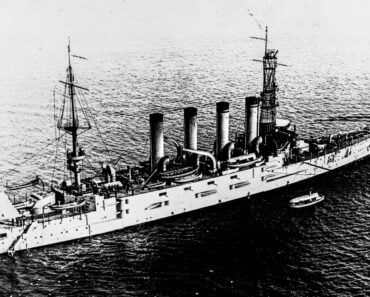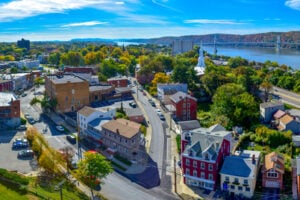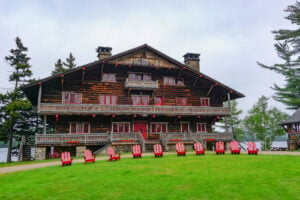

North Brother Island in the East River as seen from Barretto Point Park in the Bronx. Photo: RoySmith, CC BY-SA 4.0, via Wikimedia Commons.
When most people picture New York City geography, they think of Manhattan, Staten Island, the western end of Long Island occupied by Brooklyn and Queens, and the mainland portion of the Bronx. Roosevelt Island and Governors Island may come to mind as well. But beyond those familiar places, the tidal straits, bays, and sounds surrounding the five boroughs are dotted with much smaller islands that most New Yorkers never visit and, in some cases, barely know exist.
Some of these islands were shaped by enormous 19th-century engineering projects. Others became quarantine stations, hospitals, military sites, burial grounds, radio-transmission centers, or private retreats. Several are now protected natural areas where birds and other wildlife have reclaimed places once occupied by people.
From the abandoned hospital buildings of North Brother Island to the radio towers of High Island and the explosive engineering history of Mill Rock, here are 10 secret islands in New York City waters and the remarkable stories behind them.
1. North Brother Island
- Location: East River, between the South Bronx and Rikers Island
- Size: Roughly 20 acres of island land
- Status: NYC Parks natural area and Forever Wild preserve; public access is highly restricted
North Brother Island holds one of the darkest institutional histories in New York City. In 1885, the city established a new Riverside Hospital complex there to replace an older facility on Blackwell’s Island that had become too small. The island became associated with the isolation and treatment of people with contagious diseases, including smallpox, tuberculosis, and typhoid. Its most famous patient was Mary Mallon, better known as “Typhoid Mary,” who was confined there from 1907 to 1910 and again from 1915 until her death in 1938. North Brother was also the site of the General Slocum disaster on June 15, 1904, when more than 1,000 people died after the excursion steamer caught fire in the East River. After the hospital era, the island was used for veterans’ housing and later a youth drug-rehabilitation program. Institutional use ended in the 1960s, leaving the hospital buildings, staff residences, laboratories, and other structures to decay beneath dense vegetation.
2. South Brother Island
- Location: East River, directly south of North Brother Island
- Size: About 7 acres
- Status: NYC Parks natural area and Forever Wild preserve
South Brother Island never developed the institutional history of its larger neighbor, but it has an extraordinary New York story of its own. The island was once owned by brewing magnate, congressman, and New York Yankees owner Jacob Ruppert, who used it as a summer retreat. A house on the island was destroyed by fire in 1909, and South Brother was never substantially redeveloped. Over time, its isolation made it increasingly important to nesting birds. After decades in private hands, the Trust for Public Land acquired the island through a conservation effort involving the Wildlife Conservation Society, The POINT Community Development Corporation, federal funding secured by Congressman José E. Serrano, and other partners. In 2007, the deed was transferred to NYC Parks, permanently protecting South Brother as part of the city’s network of natural areas.
3. U Thant Island, Officially Belmont Island
- Location: East River between Manhattan and Long Island City, opposite the United Nations
- Size: About half an acre
- Status: Artificial island; public access is restricted
U Thant Island did not exist in its present form until engineers began excavating the Steinway Tunnel beneath the East River in the 1890s. Workers sank a construction shaft through a rocky formation known as Man-o’-War Reef, and excavated material helped create the small island that emerged above the river. William Steinway began the tunnel project, while August Belmont Jr. later carried it forward, which is why the island’s legal name became Belmont Island. The tunnels beneath it eventually became part of the 7 train route. In 1977, a meditation group made up largely of United Nations employees and followers of Sri Chinmoy leased the island from New York State, planted vegetation, erected a peace arch, and dedicated the site to former United Nations Secretary-General U Thant. The unofficial name stuck. Today, the tiny island remains visible from the East Side near the United Nations Headquarters and from the Queens waterfront.
4. Hart Island
- Location: Western Long Island Sound, east of City Island in the Bronx
- Size: Approximately 130 acres
- Status: New York City public cemetery; access available through scheduled visits and NYC Parks tours
Hart Island has served New York City in more roles than almost any other island in its waters. During the Civil War, the island was used to train Union soldiers, including members of the 31st United States Colored Troops, and later held Confederate prisoners of war. New York City purchased Hart Island in 1868, and public burials began the following year. More than one million people have since been buried there. Over the decades, Hart Island also housed institutions that included a reform school, hospital facilities, shelters, jails, and a drug-rehabilitation program. From 1955 to 1961, the U.S. Army maintained a Nike missile launch site on part of the island. In 2021, management was transferred from the Department of Correction to NYC Parks and other city agencies involved in burial services. Hart Island remains an active public cemetery, but scheduled gravesite visits and occasional Urban Park Ranger tours now give the public limited access to an island that was closed off for generations.
5. Swinburne Island
- Location: Lower New York Bay off Staten Island
- Size: About 2.5 acres
- Status: Gateway National Recreation Area; closed to public access except by permit
Swinburne Island is one of two artificial quarantine islands built after Staten Island residents violently destroyed the old Marine Hospital quarantine complex in 1858. Harbor sand and fill were used to create new offshore sites where contagious disease could be handled away from populated neighborhoods. The smaller island was completed in 1870 as Dix Island and was later renamed for physician and Civil War surgeon John Swinburne. Travelers who were visibly ill with contagious diseases were hospitalized there, while people who had been exposed but showed no symptoms were generally sent to neighboring Hoffman Island. A fire in 1934 destroyed many of Swinburne’s surviving buildings. Today the island is part of Gateway National Recreation Area and is managed primarily as wildlife habitat, including a haul-out area used by seals during the colder months.
6. Hoffman Island
- Location: Lower New York Bay, north of Swinburne Island
- Size: About 11 acres
- Status: Gateway National Recreation Area; closed to public access except by permit
Hoffman Island was completed in 1873 as the larger companion to Swinburne Island. It was named for former New York City mayor and New York governor John T. Hoffman. The two-island quarantine system divided arriving passengers according to medical risk: people who were known to be ill were treated on Swinburne, while passengers who had been exposed to contagious disease but were not yet showing symptoms could be held on Hoffman for observation. The island later took on a very different role. In 1938, the U.S. Maritime Service opened a training school there for merchant seamen, and the facility operated through World War II. Hoffman and Swinburne became part of Gateway National Recreation Area in the 1970s. Both remain uninhabited and closed to ordinary visitation, allowing birds, seals, and other wildlife to use the islands with minimal human disturbance.
7. Rat Island
- Location: City Island Harbor, between City Island and Hart Island in the Bronx
- Size: Roughly 2.5 acres at its broadest measure
- Status: Privately owned rocky island
Rat Island may have the least appealing name on this list, but it is one of New York City’s most unusual pieces of private real estate. The low bedrock island changes dramatically with the tide and has spent much of its modern history in private hands. Marine contractor Edmund “Red” Brennen used it for years in connection with his salvage business before putting the property up for auction. In October 2011, City Island resident Alex Schibli won the auction with a $160,000 bid; reports that include the buyer’s premium place the total cost at roughly $176,000. Schibli said he wanted to preserve the island largely as it was and used it for family outings. A small statue of Swiss folk hero William Tell was later placed on the rocks. Stories about the origin of the name “Rat Island” and supposed quarantine uses have circulated for years, but the documented modern story of this tiny private island is strange enough without relying on the legends.
8. The Chimney Sweeps Islands
- Location: City Island Harbor, near Pelham Bay Park in the Bronx
- Size: Two rocky islets totaling about half an acre
- Status: Uninhabited NYC Parks property within Pelham Bay Park
The Chimney Sweeps are two small bedrock islets that sit near City Island and High Island. Their unusual name has never been explained with certainty. One story says the pair resembled chimney-sweeping tools from a distance, while a former owner suggested that “chimney” was once used as a nautical term for a current of water running between rocks. What is documented is that the islands were privately owned during the early 20th century and used as a secluded weekend retreat. A 1939 account in The New Yorker described small houses and shacks there shortly before the city acquired the property. The islands are now part of Pelham Bay Park and serve primarily as undeveloped wildlife habitat rather than recreational islands.
9. High Island
- Location: Long Island Sound just off City Island in the Bronx
- Size: About 6 acres
- Status: Restricted active radio-transmission site
High Island has gone from quarry to summer retreat to one of the most unusual broadcasting sites in New York. Stone was quarried there during the 19th century, and by the early 20th century the island supported a seasonal community of summer cottages. That era disappeared when radio companies turned the island into a transmitter site. The powerful 660 and 880 AM signals began operating from High Island in the early 1960s. On August 27, 1967, a small private airplane struck the main radio tower during bad weather, killing the two people aboard, destroying the antenna, and knocking WCBS and WNBC off the air on the eve of WCBS’s planned all-news launch. The tower was rebuilt. Today, WFAN at 660 AM and WHSQ at 880 AM—formerly the frequency of WCBS Newsradio 880—continue to transmit from High Island, making this nearly invisible Bronx island part of New York broadcasting every day.
10. Mill Rock
- Location: East River at Hell Gate, about 1,000 feet off East 96th Street in Manhattan
- Size: About 8.6 acres
- Status: NYC Parks natural area; closed to ordinary public access
Mill Rock sits in Hell Gate, the turbulent stretch of the East River that once terrified sailors because of its currents and submerged rocks. During the War of 1812, the federal government built a defensive blockhouse on Great Mill Rock to help guard New York against a possible British naval attack. Later in the 19th century, the U.S. Army Corps of Engineers used the area as a base for one of the most ambitious navigation-improvement projects ever attempted in the city. On October 10, 1885, engineers detonated roughly 300,000 pounds of explosives beneath nearby Flood Rock, producing what was widely described at the time as the largest man-made explosion ever undertaken. Rubble from the project was later used to fill the space between Great Mill Rock and Little Mill Rock, creating the larger single island seen today. New York City acquired Mill Rock in 1953. It is now a wooded natural area and bird habitat near the Hell Gate Bridge, closed to ordinary public visitation.
NYC’s Secret Islands at a Glance
| Island | Waterway / Borough | Origin | Key Historical Identity | Current Status |
|---|---|---|---|---|
| North Brother Island | East River / Bronx | Natural | Riverside Hospital, Typhoid Mary, General Slocum | Forever Wild natural area; highly restricted |
| South Brother Island | East River / Bronx | Natural | Jacob Ruppert’s summer retreat | NYC Parks natural preserve |
| U Thant / Belmont Island | East River / Manhattan | Artificial | Steinway Tunnel construction and U Thant dedication | Restricted artificial island |
| Hart Island | Long Island Sound / Bronx | Natural | Civil War site, city cemetery, Nike missile site | Active public cemetery with scheduled access |
| Swinburne Island | Lower New York Bay / Staten Island | Artificial | Contagious-disease hospital | Gateway National Recreation Area; closed except by permit |
| Hoffman Island | Lower New York Bay / Staten Island | Artificial | Quarantine observation station and Maritime Service school | Gateway National Recreation Area; closed except by permit |
| Rat Island | City Island Harbor / Bronx | Natural | Private ownership and marine-salvage history | Privately owned |
| Chimney Sweeps Islands | City Island Harbor / Bronx | Natural | Former private weekend retreat | Uninhabited NYC Parks property |
| High Island | Long Island Sound / Bronx | Natural | Summer colony and major AM radio transmitter site | Restricted active broadcast site |
| Mill Rock | East River / Manhattan | Natural / expanded with fill | War of 1812 defense and Hell Gate engineering | NYC Parks natural area |
For more on the unusual places and structures surrounding New York City’s waterways, read The History of Rikers Island, explore the History of the United Nations Headquarters in New York, and revisit the History of the Hell Gate Bridge.
Sources
- New York City Department of Health — Historical Chronology
- NYC Parks — North Brother/South Brother Islands Harbor Herons Preserve
- Trust for Public Land — South Brother Island Protected
- Untapped New York — U Thant Island / Belmont Island
- City of New York — Hart Island
- National Park Service — Hoffman and Swinburne Islands
- CBS New York — Rat Island Auction
- The New Yorker — Chimney Sweeps
- Radio World — High Island and the WCBS Transmitter
- New York Radio Guide — WHSQ 880 High Island Transmitter
- New York Radio Guide — WFAN 660 High Island Transmitter
- U.S. Army Corps of Engineers — The Conquest of Hell Gate
Published September 10, 2026.