Feature Photo: Finn COllins, CC BY-SA 3.0 <https://creativecommons.org/licenses/by-sa/3.0>, via Wikimedia Commons
Long Island became one of the most competitive suburban electronics and appliance markets in the New York metropolitan area during the second half of the 20th century. As Nassau and Suffolk Counties filled with new homes, shopping centers, and busy commercial strips, retailers fought for customers buying televisions, stereos, refrigerators, air conditioners, CB radios, VCRs, compact-disc players, computers, and eventually home-theater systems.
The stores were often as memorable as the products. Some had unforgettable television commercials and jingles. Others were destinations for serious audiophiles who wanted to spend an afternoon comparing receivers, turntables, speakers, and amplifiers in dedicated listening rooms. Still others were enormous warehouse-style stores where rows of televisions and appliances seemed to stretch forever. This is not a ranking, but a look back at 20 electronics, stereo, appliance, and technology retailers that became part of Long Island shopping life and are no longer part of the Island’s retail landscape in the way we remember them.
1. Crazy Eddie
Long Island Connection: Syosset became Crazy Eddie’s second location in 1973, and the company later operated additional Long Island stores, including Carle Place.
The Story: Few electronics retailers became as deeply embedded in New York popular culture as Crazy Eddie. The business began at the end of the 1960s, with the Crazy Eddie name appearing in the early 1970s. Its manic television commercials featured spokesman Jerry Carroll shouting that the prices were “insane,” while stores competed aggressively on televisions, stereos, VCRs, radios, tapes, and other electronics. Behind the famous advertising was a massive accounting fraud that eventually helped bring down the company. The original Crazy Eddie chain collapsed into bankruptcy and liquidation in 1989.
2. Nobody Beats the Wiz
Long Island Connection: The Wiz entered the Long Island market during the 1980s and opened one of its new-generation superstores in Lake Grove in 1991.
The Story: “Nobody Beats the Wiz” became one of the most familiar advertising phrases in the New York metropolitan area. The chain sold televisions, stereos, computers, music, movies, and home-entertainment equipment while sponsoring major New York sports teams and saturating local television and radio with advertising. After rapid expansion, the company filed for bankruptcy protection in 1997. Cablevision bought the business in 1998 for $80 million and continued operating The Wiz before closing the remaining physical stores in 2003.
3. Newmark & Lewis
Long Island Connection: Newmark & Lewis was founded in Hicksville in 1924 and grew into one of the New York area’s largest electronics and appliance retailers.
The Story: Long Islanders of a certain generation still remember company chairman Richard “Dick” Lewis looking into the camera and promising that “Dick Lewis is watching.” The stores sold televisions, camcorders, compact-disc players, refrigerators, washing machines, microwaves, and other major appliances and electronics. Newmark & Lewis expanded aggressively during the 1980s, but recession, fierce price competition, and the costly acquisition of Brick Church Electronics weakened the company. It filed for Chapter 11 protection in 1991 and closed its remaining stores in early 1992.
4. Lafayette Radio Electronics
Long Island Connection: Lafayette maintained its headquarters at 111 Jericho Turnpike in Syosset and a major warehouse operation in Hauppauge.
The Story: Lafayette was a dream store for people who wanted more than a television or refrigerator. Its catalogs and stores carried radios, stereo receivers, speakers, electronic components, amateur-radio gear, test equipment, antennas, kits, tubes, and countless small parts. The company also developed listening rooms where customers could compare hi-fi equipment. Lafayette entered Chapter 11 bankruptcy in 1981, and Circuit City acquired a small group of surviving stores before the Lafayette retail name disappeared.
5. Tops Appliance City
Long Island Connection: Tops entered Long Island with a large Westbury store in September 1993.
The Story: Tops Appliance City represented the 1990s superstore approach to appliance and electronics shopping. Its Westbury location offered major appliances, televisions, audio equipment, computers, and home-entertainment products under one enormous roof. The chain expanded rapidly throughout the metropolitan area but struggled with the low margins and brutal competition that defined the business. Tops filed for bankruptcy and liquidated in 2000.
6. Stereo Warehouse
Long Island Connection: Stereo Warehouse was part of the specialty hi-fi scene remembered by New York-area and Long Island audio buyers during the 1970s and 1980s.
The Story: Before compact all-in-one systems and later soundbars took over living rooms, serious stereo shopping often meant choosing separate receivers, amplifiers, turntables, tape decks, and speakers. Stereo Warehouse specialized in audio and video equipment and used the warehouse concept long before it became standard retail language. The Stereo Warehouse trademark was in commercial use by 1971, and the name became part of the fiercely competitive New York-area hi-fi market that also included Lafayette, Harvey, Tech HiFi, and numerous independent stereo dealers.
7. Harvey Electronics
Long Island Connection: Harvey Electronics operated a major Long Island showroom in Greenvale.
The Story: Harvey occupied a different part of the market than the loud discount chains. Founded in 1927, the company evolved into a high-end audio and home-theater retailer serving customers interested in premium components, carefully designed systems, and custom installation. By the 2000s, big-box electronics chains and changing consumer habits had made the traditional specialty showroom increasingly difficult to sustain. Harvey filed for Chapter 11 protection in December 2007 and liquidated its remaining stand-alone stores, including Greenvale, in 2008.
8. Friendly Frost
Long Island Connection: Friendly Frost was a Long Island-based appliance chain with stores throughout the metropolitan area and a particularly strong presence in Nassau and Suffolk Counties.
The Story: Friendly Frost belonged to an earlier generation of appliance retailing, when a family buying a new television, refrigerator, freezer, or air conditioner often went to a regional dealer instead of a national big-box chain. The company became so closely tied to electronics retail that it purchased Babylon radio station WGLI in 1960. By the late 1960s, Radio Shack departments were operating inside Friendly Frost locations, including stores in Nassau and Suffolk. The Friendly Frost name eventually disappeared as the regional appliance business became increasingly competitive.
9. RadioShack
Long Island Connection: Radio Shack departments appeared inside Friendly Frost stores on Long Island by the late 1960s, followed by decades of stand-alone RadioShack locations across Nassau and Suffolk.
The Story: RadioShack was where generations went for batteries, cables, switches, adapters, CB radios, scanners, answering machines, telephones, electronic kits, and eventually personal computers. Newsday reported that about 28 RadioShack locations still dotted Long Island as recently as March 2017, when the retailer entered bankruptcy protection for the second time in two years. The brand later shifted primarily toward online and international operations, but the familiar neighborhood stores that once seemed to be everywhere on Long Island largely disappeared.
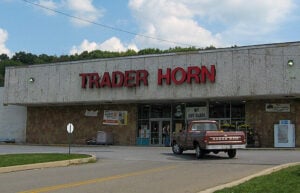
10. Trader Horn
Long Island Connection: Trader Horn was one of the New York metropolitan appliance and electronics chains that competed directly for the same suburban customers as P.C. Richard, The Wiz, Newmark & Lewis, and Crazy Eddie.
The Story: Trader Horn was built around discount pricing on televisions, stereos, appliances, and home-entertainment equipment. The company became a familiar name during the highly competitive electronics wars of the 1980s and early 1990s. Long Island Business News later listed Trader Horn among the major regional competitors that disappeared while P.C. Richard survived. Trader Horn of New York entered Chapter 11 bankruptcy in 1994.
11. Square Deal Radio & TV
Long Island Connection: Square Deal began on Main Street in Patchogue and later operated a larger showroom at 456 Waverly Avenue.
The Story: Square Deal represented the independent stereo dealer at its best. The Patchogue store became known among Suffolk County audio enthusiasts for serious hi-fi equipment and knowledgeable salespeople rather than mass-market warehouse shopping. Period audio dealer lists place Square Deal at 456 Waverly Avenue and show the store carrying respected brands across amplifiers, speakers, turntables, and home audio. Local audio histories remember the store closing in 1994.
12. Sixth Avenue Electronics
Long Island Connection: Sixth Avenue Electronics opened a Carle Place store in 2006 and followed with a 23,000-square-foot Commack location in 2007.
The Story: Sixth Avenue Electronics entered Long Island late in the classic electronics-superstore era but arrived aggressively, competing for televisions, digital cameras, home theater, car audio, and premium electronics customers. Industry coverage described Commack as the chain’s second Long Island location after Carle Place. The company expanded quickly during the 2000s, but by 2011 its Long Island stores were gone as the regional chain contracted sharply.
13. Circuit City
Long Island Connection: Circuit City became a major Long Island electronics presence during the late 1990s and 2000s, with stores in communities including Westbury, Lake Grove, Bay Shore, and the Patchogue-Holbrook area.
The Story: Circuit City brought the national big-box electronics model directly into a market already famous for aggressive local competitors. Its stores sold televisions, computers, home audio, car stereos, cameras, movies, and for part of its history, major appliances. The chain’s red-and-white storefronts became familiar across Long Island. Circuit City filed for bankruptcy in 2008 and liquidated its remaining U.S. stores in 2009.
14. Incredible Universe
Long Island Connection: Tandy opened an enormous Incredible Universe store at 999 Corporate Drive in Westbury in 1995.
The Story: Incredible Universe was exactly what its name promised: a spectacular electronics warehouse designed to feel more like an attraction than a conventional store. The Westbury location sold computers, televisions, audio equipment, appliances, software, games, and other technology in a building of extraordinary size. The concept proved expensive to operate. Tandy announced the closure of the chain at the end of 1996, and the Westbury store closed in 1997. The site was later converted for Target.
15. CompUSA
Long Island Connection: CompUSA operated a large store at 623 Stewart Avenue in Garden City.
The Story: As home computers moved from hobbyist products to household necessities, CompUSA became one of Long Island’s major destinations for desktops, laptops, printers, software, computer parts, accessories, and technical service. Its Garden City store occupied about 28,000 square feet. The company began closing stores nationwide during the 2000s, and the Garden City location was gone by 2007. The old retail property was later redeveloped for medical use. They were mostly focused on computers, but they did sell other electronics, and their large inventory of screens makes them a necessary add to this list.
16. Computer City
Long Island Connection: Computer City operated in the Westbury-Garden City retail corridor, close to both CompUSA and Incredible Universe.
The Story: Tandy launched Computer City as personal-computer sales exploded during the 1990s. Long Island became an unusually intense battleground: Computer City, CompUSA, and Incredible Universe all operated within a few miles of one another around Westbury and Garden City. Computer City grew quickly but was ultimately sold to CompUSA in 1998, eliminating one of the most visible computer superstore competitors of the decade.
17. Sam Goody
Long Island Connection: Sam Goody’s Long Island history included Green Acres, Walt Whitman, Smith Haven, Sunrise Mall, Roosevelt Field, and other locations.
The Story: Sam Goody was primarily remembered as a music store, but for decades it also belonged to the consumer-electronics ecosystem. Along with records, eight-tracks, cassettes, CDs, and video, the chain sold items such as cassette players and other audio equipment. Newsday traces the first Long Island location to Green Acres, followed by Walt Whitman in 1962, Smith Haven in 1969, Sunrise Mall in 1973, and Roosevelt Field in the 1990s. Most Sam Goody stores vanished as downloading, streaming, online shopping, and changing mall traffic transformed music retail.
18. E.J. Korvette
Long Island Connection: Korvettes opened its first Long Island store in Carle Place in 1955.
The Story: E.J. Korvette was a full-line discount department store rather than a pure electronics chain, but its record, camera, appliance, and electronics departments made it an important stop for generations of Long Island shoppers. The company helped popularize aggressive discount retailing in the postwar era and grew into a major metropolitan chain. Korvettes filed for bankruptcy and closed its remaining stores on Christmas Eve 1980. For the complete story, read our History of New York’s Korvettes Department Stores.
19. Harrison Radio
Long Island Connection: Harrison Radio operated at 20 Smith Street in Farmingdale and advertised nationally to amateur-radio enthusiasts.
The Story: Harrison Radio was a different kind of electronics destination: a specialist for amateur radio, communications equipment, antennas, test gear, and related components. The company traced its roots to 1925, and by the 1970s and early 1980s its Farmingdale store advertised itself to the ham-radio community as “Ham Headquarters USA.” Stores like Harrison belonged to a period when electronics retail included a large hands-on hobbyist culture that has become much harder to find in physical stores.
20. JGE Appliances
Long Island Connection: Although JGE was a New York metropolitan chain rather than a purely Long Island company, its commercials and union-member discount model became part of the television culture remembered by many Long Islanders in the 1970s.
The Story: JGE, short for Jamaica Gas & Electric, became famous through co-owner Jerry Rosenberg’s television commercials. An off-camera voice would ask, “What’s the story, Jerry?” before Rosenberg explained the company’s discount system for union members, civil-service employees, and their families. At its height, JGE grew into a large regional appliance business, but complaints and legal problems followed its rapid expansion. The company was defunct by 1977, yet the commercials remained lodged in New Yorkers’ memories long after the stores disappeared.
For more stories about the stores and shopping traditions New Yorkers remember, read our History of New York’s Korvettes Department Stores, History of TSS Stores, Times Square Stores in NY, and The Story of Waldbaum’s: From a Brooklyn Butter Shop to a Long Island Supermarket Icon.
Sources
The New Yorker — Remembering Crazy Eddie
Encyclopedia.com — Nobody Beats the Wiz and Cablevision Retail History
The New York Times — Newmark & Lewis Stores to Close
World Radio History — Lafayette Radio Electronics Catalog Archive
Encyclopedia.com — Tops Appliance City History
Justia Trademarks — Stereo Warehouse Trademark History
TWICE — Harvey Electronics Going-Out-of-Business Sale
Newsday — Long Island Chain Stores We Miss
Long Island Business News — Long Island Electronics Retail Competition
TWICE — Sixth Avenue Electronics Opens Commack Store
LongIslandExchange — Historic Long Island Audio and Electronics Store Listings
TWICE — Incredible Universe Opens in Westbury
Long Island Business News — Former Garden City CompUSA Property
Radiomuseum — Harrison Radio Company History
Jerry Rosenberg and JGE Retail History
20 Legendary Electronics, Stereo & Appliance Stores Long Islanders Miss article published on ClassicNewYorkHistory.com © 2026