
Feature Photo: Everett Collection / Shutterstock.com
Ask almost any basketball fan where Michael Jordan comes from and you will hear a familiar set of answers: North Carolina, Chicago, or the University of North Carolina at Chapel Hill, where he became a household name during the 1982 NCAA championship game. What far fewer people realize is that the man widely regarded as the greatest basketball player in history was born in New York City, in the borough of Brooklyn, at Cumberland Hospital in Fort Greene.
The Birth: February 17, 1963, Fort Greene, Brooklyn
Michael Jeffrey Jordan entered the world on February 17, 1963, at Cumberland Hospital in the Fort Greene section of Brooklyn. His parents, James R. Jordan Sr. and Deloris Jordan, were living in New York at the time. James worked as an equipment supervisor, while Deloris worked in banking.
The Jordan family later moved to Wilmington, North Carolina, in 1968, when Michael was five years old. It was there that he grew up, developed his competitive drive, starred at Emsley A. Laney High School, and eventually earned a scholarship to the University of North Carolina.
North Carolina shaped Jordan’s childhood and basketball development, and Chicago became the center of his professional legend. His life, however, began in Brooklyn.
The History of Cumberland Hospital
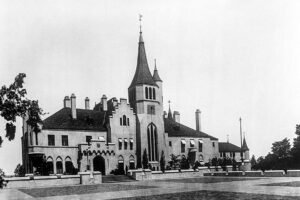
Cumberland Hospital had a long history in Brooklyn. The institution opened on February 13, 1873, as the Brooklyn Homeopathic Hospital at 109 Cumberland Street. It was rebuilt during the early twentieth century and renamed Cumberland Hospital in 1922.
By the time Jordan was born, Cumberland was a municipal hospital serving Fort Greene and the surrounding Brooklyn neighborhoods. The hospital was associated with 39 Auburn Place during that period and operated as a 366-bed public facility.
Cumberland closed as a full-service hospital on August 24, 1983, as patients and services were shifted within New York City’s municipal hospital system. The former hospital building on Auburn Place later became the Auburn Family Reception Center. A separate modern health facility carrying the Cumberland name now operates at 100 North Portland Avenue as NYC Health + Hospitals/Gotham Health, Cumberland.
Michael Jordan, Born in 1963
The future six-time NBA champion, five-time NBA Most Valuable Player, and two-time Olympic gold medalist was born at Cumberland Hospital on February 17, 1963. Jordan grew up in North Carolina and achieved basketball immortality with the University of North Carolina and the Chicago Bulls, but his birthplace remains Brooklyn, New York.
Mike Tyson, Born in 1966
Just over three years after Jordan’s birth, Michael Gerard Tyson was born at Cumberland Hospital on June 30, 1966. Tyson grew up in Brooklyn and became the youngest heavyweight champion in boxing history when he won a world title at twenty years old.
The Notorious B.I.G., Born in 1972
Christopher George Latore Wallace, later known as The Notorious B.I.G. and Biggie Smalls, was born at Cumberland Hospital on May 21, 1972. Wallace grew up in Brooklyn and became one of the most influential recording artists in hip-hop history before his death in 1997 at the age of twenty-four.
The fact that a single municipal hospital in Fort Greene served as the birthplace of a basketball icon, a heavyweight champion, and a rap legend within nine years is one of Brooklyn’s most remarkable cultural coincidences.
Other Brooklyn-Born Basketball Legends
Brooklyn has produced an extraordinary number of basketball players. Bernard King, born in Brooklyn on December 4, 1956, became one of the most explosive scorers in NBA history and was inducted into the Naismith Memorial Basketball Hall of Fame in 2013. King starred for the New York Knicks during the 1980s and became a beloved figure at Madison Square Garden, the same arena where Jordan later delivered some of his most memorable performances.
King’s birthplace has been associated with Cumberland Hospital in local Brooklyn histories, although widely available biographical records generally identify only Brooklyn as his birthplace. His inclusion among Brooklyn’s basketball legends remains unquestioned.
Jordan and Madison Square Garden
Although Jordan grew up in North Carolina and built his professional legacy in Chicago, his relationship with New York City remained significant throughout his career. Madison Square Garden held special importance for him. Jordan repeatedly elevated his performance there, treating the arena as one of basketball’s premier stages.
The 55-Point Game: March 28, 1995
One of the most celebrated performances of Jordan’s career took place at Madison Square Garden on March 28, 1995. It was his fifth game after returning from his first retirement, a seventeen-month absence during which he pursued a career in minor league baseball. The Chicago Bulls were facing the New York Knicks, and Jordan was still working his way back into basketball condition.
Jordan scored 55 points against one of the era’s toughest defensive teams and led Chicago to a 113-111 victory. The game became known as the “Double Nickel” and quickly silenced doubts about whether he could regain his previous form.
The performance became one of the defining moments of Jordan’s comeback and strengthened the connection between him and the arena located in the city where he was born.
His Final Madison Square Garden Appearance as a Bull: March 8, 1998
On March 8, 1998, Jordan made his final appearance at Madison Square Garden as a member of the Chicago Bulls. He scored 42 points as Chicago defeated the Knicks, 102-89.
For the occasion, Jordan wore an original pair of red, black, and white Air Jordan 1 sneakers from 1985. The shoes connected the final months of his Bulls career to the beginning of the Air Jordan era. They were old and too small for him by 1998, and Jordan later described playing with painful, bloodied feet.
The Air Jordan 1 had helped transform the athletic shoe business and establish Jordan as a cultural figure whose influence extended far beyond basketball. Wearing the original model at the Garden gave the game an additional layer of history.
The Brooklyn Connection That Never Disappeared
Jordan has always been associated primarily with North Carolina and Chicago, and with good reason. North Carolina was his childhood home and the place where he developed into a national basketball star. Chicago was where he won six NBA championships and became a global icon.
Brooklyn nevertheless owns the first chapter of his story. Michael Jordan’s birthplace was Cumberland Hospital in Fort Greene, New York City. The same hospital also welcomed Mike Tyson and The Notorious B.I.G. into the world, giving one Brooklyn medical institution a remarkable place in American sports and cultural history.
For a player whose career was defined by his ability to rise to the occasion on the largest stages, it seems fitting that his story began in New York. North Carolina and Chicago may claim the most famous chapters of Michael Jordan’s life, but New York can accurately say that he was born in Brooklyn.
Sources
ESPN, Jordan: The Beginning in Brooklyn
NYC Health + Hospitals/Gotham Health, Cumberland
ESPN, Chicago Bulls at New York Knicks, March 28, 1995
ESPN, Chicago Bulls at New York Knicks, March 8, 1998
Complex, Michael Jordan’s Final Bulls Game at Madison Square Garden
Encyclopedia.com, Mike Tyson Biography
Was Michael Jordan Born in New York? The True Story of His Brooklyn Birth article published on ClassicNewYorkHistory.com © 2026