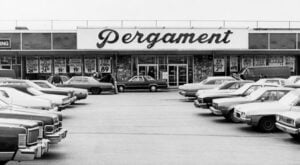
Pergament Home Center. Photo: Akhabaiev, CC BY-SA 3.0, via Wikimedia Commons
When the post-World War II housing boom transformed Nassau and Suffolk Counties from farm fields and Gold Coast estates into sprawling suburban neighborhoods, Long Island became one of the great proving grounds for the American do-it-yourself movement. The Cape Cods of Levittown, the ranch houses of western Suffolk, and the split-levels that appeared across the Island all needed paint, lumber, wallpaper, storm doors, carpeting, garden supplies, pool equipment, tools, and plenty of weekend labor.
Before Home Depot and Lowe’s came to dominate the home-improvement business, Long Islanders shopped at a remarkable mixture of regional home-center chains, family hardware stores, lumberyards, nurseries, pool stores, and specialty retailers. Some disappeared decades ago. Others survived by remaining local, specialized, and personal in ways the giant warehouse stores could never completely duplicate.
The suburban transformation behind many of these businesses can also be seen in our History of Levittown and the American Dream. Here are 25 classic Long Island home-improvement, hardware, and garden stores that helped generations of homeowners build, repair, decorate, and enjoy their homes.
1. Pergament Home Centers
Years Active: 1935–2001
Long Island Connection: Founded in Franklin Square and later headquartered in Melville, Pergament became one of Long Island’s defining home-improvement chains.
The Story: For generations of Long Islanders, Pergament was the home center. Louis Pergament opened the business in Franklin Square in 1935, and the company grew from its local roots into a regional chain selling paint, wallpaper, flooring, lighting, tools, hardware, and other home-improvement merchandise. At its peak, Pergament operated more than 40 stores. By 2001, the company still had 17 Long Island locations, but competition from Home Depot and Lowe’s had changed the market. Pergament entered bankruptcy and went out of business that year, ending one of the Island’s most recognizable retail names.
2. Rickel Home Centers
Years Active: 1953–1998
Long Island Connection: The New Jersey-based chain expanded into New York and became one of Pergament’s best-remembered competitors on Long Island.
The Story: Rickel began with brothers Alvin, Mortimer, and Robert Rickel and grew into a supermarket-style home-improvement chain built around plumbing, heating, electrical supplies, tools, and hardware. Its familiar advertising promised that “Rickel helps you do it better,” and the stores became part of the weekend repair-and-remodeling routine for many suburban families. Rickel eventually operated more than 90 stores. After the company combined with Channel Home Centers in 1994, mounting debt and fierce big-box competition contributed to a 1996 bankruptcy. The remaining stores were liquidated in 1997 and 1998.
3. Channel Home Centers
Years Active: 1948–1994 as a retail home-center chain
Long Island Connection: Channel entered the New York market during its rapid late-1970s expansion and became a familiar regional alternative to Pergament and Rickel.
The Story: Channel grew out of a New Jersey lumber business, with its first retail outlet opening in Newark in 1948. By the late 1970s and 1980s, the company had expanded far beyond lumber into the full home-center format, with departments devoted to tools, plumbing, electrical supplies, building materials, paint, and seasonal merchandise. Channel filed for Chapter 11 protection in 1991, emerged the following year, and in 1994 was acquired along with Rickel. Most Channel locations were then converted to the Rickel name.
4. Harrows
Long Island Era: A roughly 80-year retail history ending with bankruptcy and liquidation in the 2000s
Long Island Connection: Eight of Harrows’ 10 stores were on Long Island when the company entered Chapter 11.
The Story: Harrows occupied its own special corner of Long Island suburban life. During warm weather, the stores were filled with above-ground pools, spas, grills, patio furniture, chemicals, filters, and everything else needed to turn a backyard into a summer retreat. When the seasons changed, the stores became major destinations for Christmas merchandise and decorations. Harrows survived for generations, but competition from other pool retailers, discount stores, and national home-improvement chains eventually overwhelmed the business.
5. Frank’s Nursery & Crafts
Years Active: 1957–2004 as Frank’s Nursery Sales and later Frank’s Nursery & Crafts
Long Island Connection: Frank’s operated numerous stores across Nassau and Suffolk Counties during the chain’s expansion into the New York market.
The Story: Frank’s was a springtime ritual for many Long Island homeowners. The stores combined garden-center merchandise with crafts and seasonal goods, selling annuals, shrubs, trees, fertilizer, lawn products, patio merchandise, wreaths, artificial trees, and holiday decorations. The company traced its roots to a Detroit food market that discovered there was serious business in selling plants, and the nursery operation was incorporated in 1957. Frank’s eventually became a national chain with hundreds of stores before filing for bankruptcy and liquidating its retail locations in 2004.
6. Grossman’s Lumber
Years Active: Founded in the 1890s; the original lumber retail empire later changed ownership and format
Long Island Connection: Grossman’s maintained documented Long Island operations, including a lumber distribution center in Patchogue and a former retail site in West Babylon.
The Story: Grossman’s began in Massachusetts and grew into one of the largest lumber and building-materials businesses in the eastern United States. Its orange signage and building-supply focus made it a different experience from a department store or decorative home center. Long Island contractors and serious do-it-yourself homeowners used Grossman’s for lumber and structural building materials, and railroad freight records show the company’s Patchogue distribution operation during the 1970s. Grossman’s was part of an earlier generation of home improvement when lumberyards, loading areas, and bulk building supplies mattered as much as polished retail aisles.
7. Times Square Stores (TSS)
Years Active: 1929–1989
Long Island Connection: By the 1980s, nine of TSS’s 12 large New York stores were on Long Island.
The Story: TSS was a full-line discount department store rather than a dedicated hardware chain, but its home, hardware, automotive, lawn, and seasonal departments made it an important part of Long Island’s do-it-yourself shopping culture. The enormous stores sold everything from clothing and records to tools and household goods, allowing families to take care of several errands in a single trip. The chain collapsed in 1989 after decades as one of the Island’s most familiar retailers. We tell the complete story in our History of TSS Stores, Times Square Stores in NY.
8. Island Recreational
Founded: 1974
Long Island Connection: A Long Island pool retailer headquartered in Massapequa with stores across Nassau and Suffolk Counties.
The Story: Few businesses are more closely tied to the classic Long Island backyard than Island Recreational. Its television advertising and pool packages became familiar to generations of homeowners looking to install or maintain above-ground and semi-inground pools. The stores sold pumps, filters, liners, chemicals, covers, inflatables, and other summer necessities. Unlike many names on this list, Island Recreational survived the big-box era and continues to operate on Long Island.
9. Frankel’s Home Furnishings
Long Island Era: Documented on Long Island from at least the 1960s through the 1990s
Long Island Connection: Frankel’s appeared at Mid-Island Shopping Plaza in Hicksville and later operated Long Island locations including Commack and Oceanside, with corporate offices in Port Washington.
The Story: Home improvement was not always about two-by-fours and power drills. Frankel’s served the decorating side of suburban life, with home furnishings, window treatments, floor coverings, and other interior products. It was part of the original retail mix at Mid-Island Shopping Plaza and remained a recognizable regional home-furnishings name for decades. By 1999, the company was in bankruptcy proceedings and leases for its Commack and Oceanside stores were among those auctioned.
10. Martin Viette Nurseries
Years Active: 1929–2016 under the Martin Viette name
Long Island Connection: Began in Syosset and eventually became a 42-acre horticultural destination on Northern Boulevard in Muttontown.
The Story: Martin Viette Nurseries represented the grander side of Long Island gardening. Swiss immigrant Martin Viette established his nursery in 1929 after learning the horticultural trade on a Gold Coast estate. The business moved through several locations before settling on 42 acres along Northern Boulevard in the 1950s. Generations of homeowners came for trees, shrubs, perennials, garden advice, landscape services, and seasonal displays. The Martin Viette business was sold in 2016, and Heritage Farm & Garden subsequently opened on the property, continuing its horticultural use.
11. Kaufman Allied Patio & Casual Furniture
Founded: 1939
Long Island Connection: The original Kaufman Allied opened in Central Islip and later became a familiar outdoor-furniture retailer on Long Island.
The Story: Long before “outdoor living” became a home-design catchphrase, Kaufman Allied was helping Long Islanders furnish their patios and backyards. The original business opened in Central Islip in 1939 manufacturing redwood furniture and selling directly to the public. Over time, it expanded into other forms of outdoor furniture, cushions, umbrellas, hearth products, and backyard accessories. The business reflected a distinctly suburban idea: the backyard was not simply property behind the house, but another room to furnish and enjoy.
12. Alper’s Hardware
Founded: 1911
Long Island Connection: A Port Washington institution at 81 Main Street, still operated by the Alper family.
The Story: Alper’s is the kind of traditional hardware store that explains why some independents survived while so many chains disappeared. Sam Alper established the family business in 1911, and over the decades it evolved into a full hardware operation. Today its adjoining Port Washington buildings carry tools, plumbing and electrical supplies, lawn and garden merchandise, housewares, outdoor products, and Benjamin Moore paint. More than a century of continuity has made Alper’s as much a community institution as a store.
13. Hicks Nurseries
Founded: 1853
Long Island Connection: Established in Westbury by Isaac Hicks and still serving Long Island gardeners more than 170 years later.
The Story: Hicks predates the suburban home-improvement boom by a full century, yet it adapted beautifully when Nassau County changed from estates and farms to suburban neighborhoods. Isaac Hicks began selling trees in 1853. Later generations helped landscape Gold Coast estates and developed new ways to move and sell mature trees. By the mid-20th century, Hicks increasingly focused on the retail garden-center customer. Generations of Long Islanders have gone there for trees, shrubs, flowers, garden supplies, holiday displays, and expert advice.
14. Aboff’s Paints
Founded: 1929
Long Island Connection: Founded in Huntington and expanded into a major family-run paint retailer with numerous Long Island locations.
The Story: Paint stores were once every bit as important to a home-improvement project as the lumberyard. David and Beatrice Aboff founded the business in Huntington in 1929, when paint color could be mixed to order and deliveries were still made in a very different retail world. Aboff’s grew with suburban Long Island and became especially associated with Benjamin Moore paint, decorating supplies, and knowledgeable counter service. The family-run business continues today, a rare survivor from the pre-big-box era.
15. Costello’s Ace Hardware
Costello Family Era: 1976–Present
Long Island Connection: Vincent Costello took over a small Deer Park hardware store in 1976 and built it into a multi-location family business.
The Story: Costello’s shows that the arrival of giant warehouse stores did not automatically mean the end of neighborhood hardware. Vincent Costello took over an understocked Deer Park store during the difficult economy of the 1970s, made it profitable, and opened a second location in 1982. The family continued expanding across Long Island, including into former home-center spaces. The stores built their identity around service, paint, tools, hardware, propane, and the ability to answer the small repair questions that can be frustrating in a giant warehouse.
16. Riverhead Building Supply
Founded: 1948
Long Island Connection: Began as a family lumberyard in Riverhead and grew into one of the region’s major building-material suppliers.
The Story: Riverhead Building Supply grew directly out of the postwar building boom that reshaped Long Island. Jesse and Harold Goodale and their uncle Percy Ketcham opened the lumber operation in 1948 after recognizing that returning veterans and new families would create enormous demand for housing. What began as an eastern Long Island lumberyard grew into a major supplier serving builders, contractors, architects, and homeowners. The company remains a vivid link between the Island’s postwar construction boom and today’s building industry.
17. Consumers Kitchens & Baths
Founded: 1977
Long Island Connection: A Long Island-based specialty home-improvement retailer with multiple showrooms across the Island.
The Story: By the late 1970s, kitchen and bathroom remodeling had become a major suburban industry of its own. Consumers Kitchens & Baths was founded in 1977 around the idea that homeowners could shop a specialized showroom, work with designers, and order cabinetry and related products through one retail operation. The company grew into one of Long Island’s best-known kitchen-and-bath specialists and continues to operate multiple showrooms.
18. Speonk Lumber
Founded: 1946
Long Island Connection: Founded on Montauk Highway in Speonk by brothers Ed and Stanley “Rush” Wilczewski.
The Story: Speonk Lumber may have one of the most perfectly Long Island postwar origin stories on this list. After World War II, the Wilczewski brothers recognized that returning servicemen would create new demand for housing. They opened their lumber business in 1946 on family property in Speonk, using some materials salvaged after the Hurricane of 1938. The company supplied lumber, paint, hardware, windows, roofing, and other materials as eastern Long Island construction expanded. It remains in business today.
19. East Islip Lumber
Founded: 1927
Long Island Connection: A South Shore lumberyard that began by serving marine needs and developed into a full building-supply business.
The Story: East Islip Lumber began in 1927 as a small yard serving marine applications, an origin that reflects Long Island’s waterfront economy. As suburban construction expanded, so did the business. It eventually developed a large inventory of lumber, windows, doors, decorative hardware, and other building supplies for contractors and homeowners. The company continues serving the Island and even supplies materials headed to Fire Island through the Bay Shore ferry terminal.
20. Florence Building Materials
Founded: 1946
Long Island Connection: Founded as a Long Island roofing and siding distributor and expanded to multiple locations across the Island.
The Story: Florence Building Materials began in the same immediate postwar period that launched Long Island’s great suburban construction wave. What started as a roofing and siding distributor expanded into a full-line building-material supplier offering lumber, windows, doors, decking, kitchens, trim, and other products. Its locations across Huntington, Medford, East Quogue, and the East End made Florence a familiar name particularly among contractors and serious home renovators.
21. Fortunoff and the Fortunoff Backyard Store
Long Island Milestones: Westbury superstore opened in 1964; Backyard Store concept launched in 2001
Long Island Connection: Fortunoff’s enormous Westbury store turned outdoor furniture and backyard merchandise into a major Long Island retail category.
The Story: Fortunoff began in Brooklyn in 1922, but its identity became inseparable from Long Island after the company opened its huge Westbury superstore in 1964. Among its many departments was an extensive outdoor-living business offering patio furniture, umbrellas, grills, and backyard accessories. In 2001, the company formalized that specialty with the Fortunoff Backyard Store concept. The original full-line Fortunoff operation later went through bankruptcy, but the family reacquired the brand and Backyard Store locations returned in 2010.
22. Brinkmann’s Hardware
Founded: 1976
Long Island Connection: Began as a 1,200-square-foot store in Sayville and grew into a multi-location Long Island hardware business.
The Story: Tony and Pat Brinkmann opened their first Sayville hardware store in 1976 despite already having established competitors nearby. The business survived by emphasizing broad inventory and personal service. Over the decades, Brinkmann’s expanded to communities including Blue Point, Glen Cove, Holbrook, Jamesport, Miller Place, and Plainview. Its growth is a reminder that Long Islanders never completely abandoned the neighborhood hardware-store model, even after national warehouse chains entered the market.
23. Agway on Long Island
Long Island Era: 1960s–Present in a mixture of corporate and independently operated stores
Long Island Connection: Agway served Long Island’s transition from commercial farming to suburban gardening, particularly in Suffolk County and on the North Fork.
The Story: Agway was never just a suburban hardware store. Its roots were in agriculture, feed, farm supplies, and rural life, which made the brand especially at home on eastern Long Island. In 1965, Agway was already promoting expanded garden-center operations in Southold and Mattituck. The Riverhead operation later moved into a former produce grading facility and was purchased by the Talmage family in 2000. Stores such as Talmage Farm Agway and other independent Agway dealers carried the old farm-store tradition into the age of backyard gardens, pets, lawn care, and suburban homesteading.
24. Gertz Garden Center at Mid-Island Shopping Plaza
Long Island Era: Mid-20th century
Long Island Connection: The massive Gertz department store at Mid-Island Shopping Plaza in Hicksville had a freestanding Garden Center serving suburban homeowners.
The Story: Gertz was not a dedicated home-improvement chain, but its Hicksville complex demonstrates how seriously old department stores took the suburban home and garden market. By 1960, the enormous Mid-Island Shopping Plaza store included not only its main department store but separate Tire & Auto and Garden Center facilities. Families furnishing new Long Island houses could shop for clothing and household goods while also buying products for the lawn and garden. It was the kind of all-in-one suburban retail complex that largely disappeared as shopping became more specialized.
25. Sears Hardware and Home Departments
Long Island Landmark: Sears opened its Hicksville store in 1964 and operated there for more than 50 years.
Long Island Connection: Sears stores across Long Island were major destinations for Craftsman tools, paint, appliances, lawn and garden equipment, carpeting, and household repair products.
The Story: Sears was a department store, but for many Long Island families its hardware and home departments functioned like a home center inside a much larger store. The Hicksville location became especially memorable after opening in 1964. Former employees remember working in dedicated hardware and paint departments, while shoppers came for Craftsman tools, Kenmore appliances, carpeting, lawn equipment, and replacement parts. Sears eventually experimented with freestanding Sears Hardware and Sears Appliance & Hardware stores as the home-improvement market changed. Our History of Sears, Roebuck and Co. looks more deeply at the company that once seemed capable of selling almost anything a household needed.
Long Island retail has always changed with the neighborhoods around it. Pergament, Rickel, Channel, TSS, and Frank’s disappeared, while businesses such as Hicks, Alper’s, Aboff’s, Costello’s, Riverhead Building Supply, and Brinkmann’s found ways to survive. For more retail memories, see 20 Legendary Long Island Electronics, Stereo & Appliance Stores We Miss and our look at whether New York’s dead malls can be saved.
Published September 6, 2026.